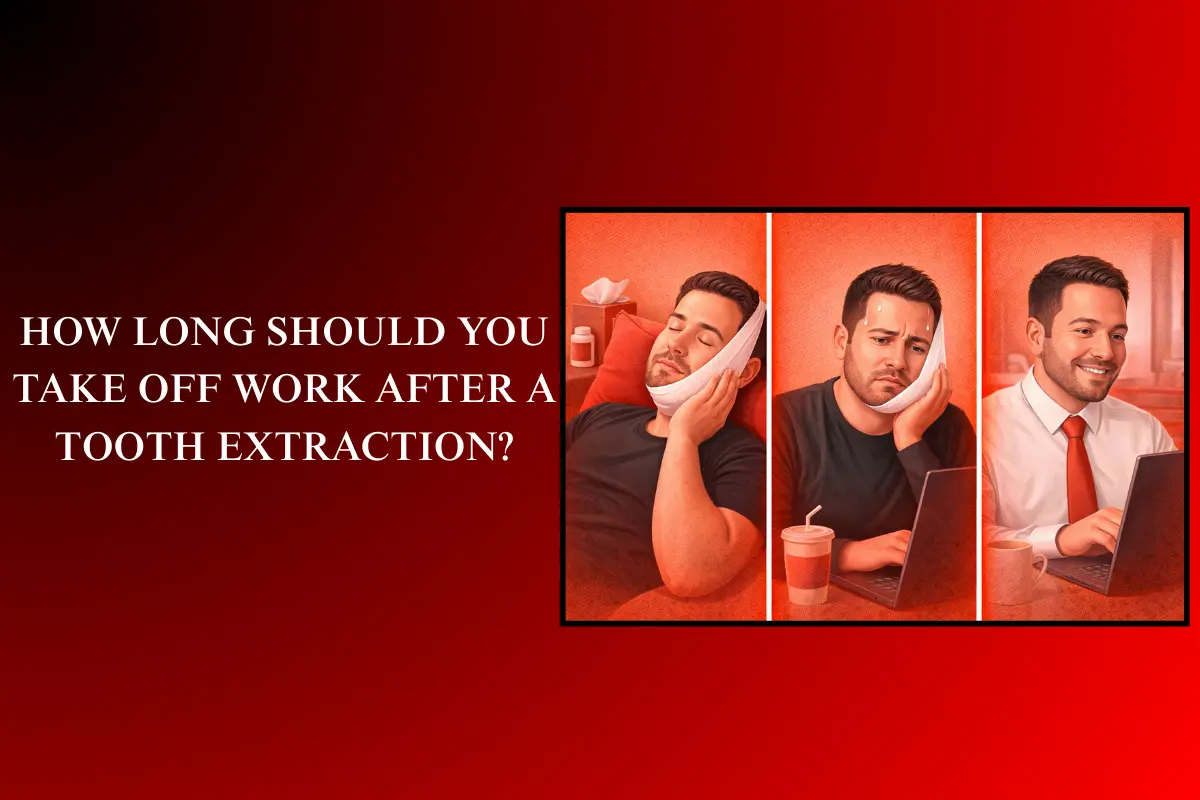
You’ve just had an emergency tooth extraction at Manchester or Leeds clinic, and now you’re sitting at home wondering: When can I go back to work? You’re not alone. This is one of the most common questions our patients ask after leaving the chair. The honest answer? It depends on the type of work you do, the complexity of the extraction, and how well you look after yourself in the hours and days that follow.
Patients push themselves back to work too soon and end up back in clinic with a dry socket or an infection that sets their recovery back by days. This guide is here to help you avoid exactly that.
What Happens to Your Mouth During a Tooth Extraction?
Before we talk about work, it helps to understand what your body is actually dealing with. A tooth extraction, even a straightforward one, is a minor surgical procedure. Your dentist has made incisions into gum tissue, loosened the tooth from its socket, and in some cases, removed bone to free an impacted tooth entirely.
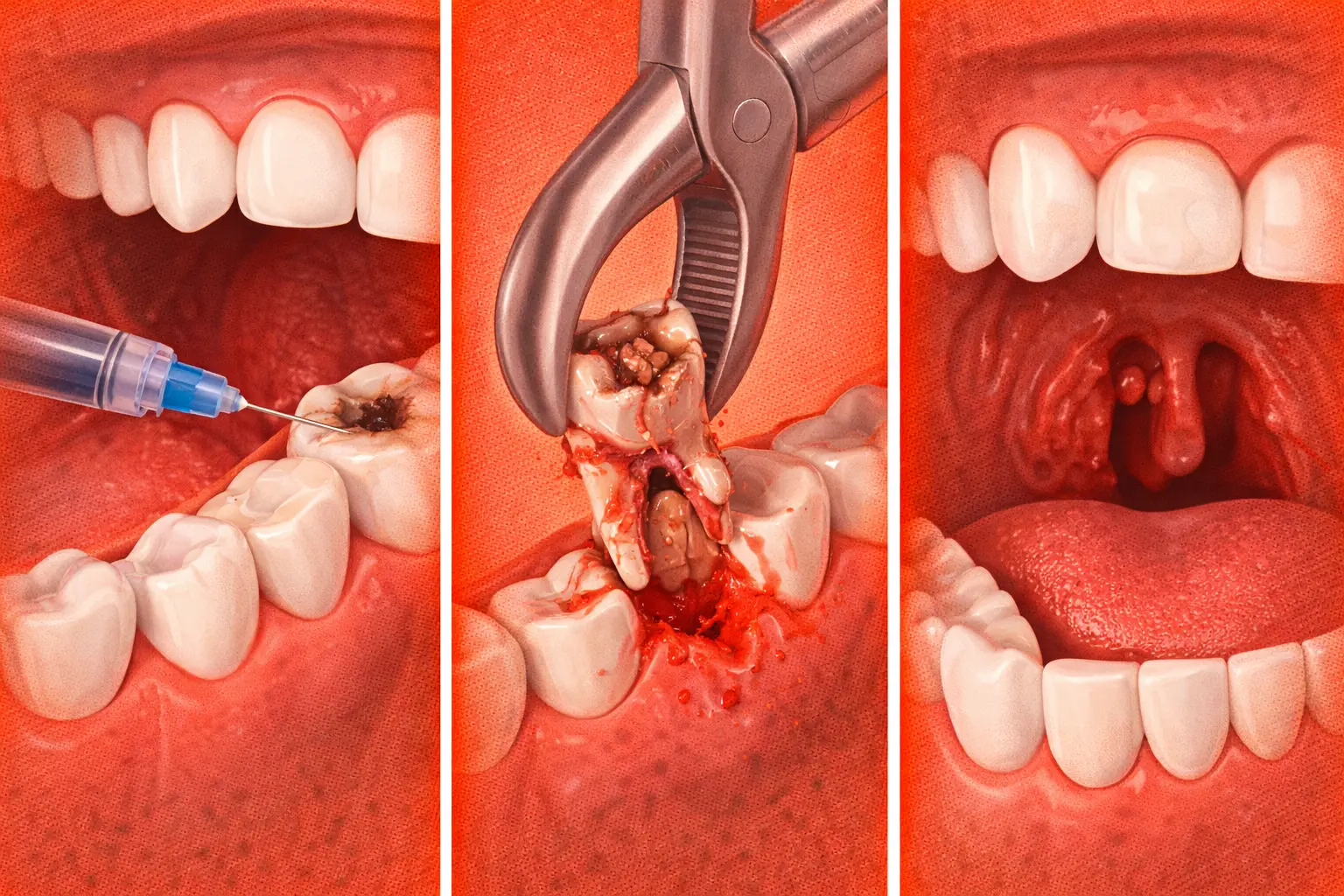
Once the tooth is out, your body immediately begins the healing process:
- First 24 hours: A blood clot forms in the socket. This clot is absolutely critical, it is the foundation of your healing. Anything that dislodges it (suction, spitting, physical exertion) can lead to a painful condition called dry socket.
- Days 2–3: Swelling typically peaks. You may experience bruising, jaw stiffness, and tenderness around the extraction site.
- Days 4–7: The clot begins to organise into soft tissue. Pain should be noticeably reducing. Most simple extractions feel manageable by day 4 or 5.
- Weeks 2–4: Soft tissue closes over the socket. Full bone regeneration takes several months, but you will feel functionally normal well before then.
Understanding this timeline is key to making the right decision about when to return to work.
Time Off Work by Job Type: A Practical Guide
There is no single “right” answer for how long to take off work. The biggest variable is the physical demand of your job. Here is a breakdown to help you plan.
Office-Based and Desk Jobs
If you work at a desk, from home, or in a low-activity environment, you may be able to return to work the day after a straightforward extraction, as long as you are not in significant pain and are not taking sedatives or strong prescription painkillers that impair concentration.
That said, if your extraction was complex (surgical removal of an impacted wisdom tooth, for example), we recommend 2–3 days off even for desk workers. Pain, swelling, and the mental fog that often accompanies strong pain medication are real obstacles to doing your job properly.
Physical and Manual Labour Jobs
If your job involves heavy lifting, construction, warehouse work, or any form of strenuous physical activity, you should plan for a minimum of 3–5 days off work after an emergency tooth extraction.
Physical exertion raises your blood pressure and heart rate, which increases blood flow to the extraction site. This raises the risk of dislodging the blood clot and triggering a dry socket. It also prolongs swelling and tenderness. Speak to your employer as early as possible about light duties if a full week off is not practical.
Customer-Facing and Talking Roles
Teachers, call centre workers, sales professionals, receptionists, anyone who spends their day talking should factor in a 2–3 day recovery period at minimum. Prolonged speaking can strain a swollen jaw, and the visible swelling or difficulty opening your mouth wide may affect your confidence and performance.
Drivers and Machine Operators
If you are taking prescription-strength painkillers or were given intravenous (IV) sedation for your procedure, you must not drive or operate machinery for at least 24–48 hours after the sedation has worn off. This is a legal requirement, not just a recommendation. Check with your dentist before getting behind the wheel.
How to Know If You Need More Time Off
Recovery does not always go to plan. Some patients bounce back in 48 hours; others need a full week. Watch out for these signs that you are not ready to return to work:
- Severe or worsening pain beyond day 3 (this may indicate dry socket or infection)
- Swelling that is spreading rather than subsiding, particularly towards the throat or eye area
- Fever above 38°C, a sign of possible infection
- Inability to open your mouth fully enough to eat or speak comfortably
- Bleeding that has not stopped after 24 hours with appropriate pressure
- Difficulty concentrating due to pain or medication
If you are experiencing any of the above, contact our team immediately. These are not symptoms to wait out at your desk.
Do You Need a Fit Note After a Tooth Extraction?
This is a question that causes a surprising amount of confusion. Here is the straightforward answer: your dentist cannot issue a fit note. In the UK, a fit note (previously known as a sick note) can only be issued by a registered medical doctor (GP), not by a dental professional.
However, if your tooth extraction was complex, if you are experiencing significant complications, or if your employer requires formal documentation of your absence, the right route is to contact your GP or reliable online service like sicknote.com. They can assess your recovery and issue a fit note for the appropriate number of days.
For absences of 7 days or fewer, most UK employers accept a self-certification (SC2 form or your employer’s own form), you do not need any medical documentation at all for short periods. Beyond 7 days, you will need to obtain a fit note.
How to Speed Up Recovery and Get Back Sooner
The single biggest factor in how quickly you recover is how well you follow your aftercare instructions.
In the First 24 Hours
- Do not rinse, spit, or use a straw. Suction and rinsing can disturb the blood clot.
- Apply gentle pressure with a gauze pad if bleeding continues. Bite down firmly for 30–45 minutes.
- Use ice packs on the outside of your cheek in 15-minute intervals to reduce swelling.
- Rest completely. Avoid any strenuous activity, including gym sessions and heavy housework.
- Take painkillers before the local anaesthetic wears off. Ibuprofen (400mg) and paracetamol (1000mg) taken alternately every few hours is a well-established protocol for managing post-extraction pain.
Days 2–7
- Rinse gently with warm salt water three to four times daily, starting from the second day. This helps keep the socket clean without disrupting healing.
- Eat soft foods only: yoghurt, mashed potato, scrambled eggs, soup (not too hot). Avoid anything crunchy, seedy, or chewy near the extraction site.
- No smoking. Tobacco use is one of the leading causes of dry socket. Every cigarette significantly delays healing.
- Sleep with your head elevated on an extra pillow to reduce blood pressure at the site and control swelling.
- Avoid alcohol, it interferes with the clotting process and interacts badly with pain medication.
What to Avoid for at Least a Week
- Vigorous exercise
- Hot drinks and food
- Alcohol
- Smoking or vaping
- Touching the socket with your tongue or fingers
Tooth Extraction Recovery: Day-by-Day Timeline
| Day | What to Expect | Work Status |
|---|---|---|
| Day 0 (procedure day) | Numbness, light bleeding, fatigue from anaesthetic. | Stay home. Rest completely. |
| Day 1 | Swelling begins, possible bruising, blood clot forming. | Stay home. Avoid all physical strain. |
| Day 2 | Swelling peaks, tenderness around jaw. | Desk workers may consider returning. Physical workers: rest. |
| Day 3 | Swelling starts to reduce, pain becoming manageable. | Most desk workers can return. Manual workers: assess carefully. |
| Days 4–5 | Noticeable improvement for most patients. | Physical workers may return to light duties. |
| Days 6–7 | Near normal for straightforward extractions. | Most patients back to full work capacity. |
| Week 2+ | Soft tissue healing complete. | Full return for all job types. |
FAQ
Conclusion
Returning to work after an emergency tooth extraction is not a one-size-fits-all situation. For most desk workers, 2–3 days off is sufficient after a simple extraction. For those in manual or physical roles, 5–7 days is a more realistic target. Surgical extractions, particularly of impacted wisdom teeth, will always require more recovery time regardless of your job type.
The most important thing you can do is listen to your body, follow your aftercare instructions carefully, and resist the urge to push through the pain. Going back too soon risks complications that will cost you far more time away from work in the long run.