The discovery of a discolored or non-vital tooth often leads to a single, pressing question: how long can a dead tooth stay in your mouth before it becomes a danger? While a tooth with a dead nerve doesn’t always hurt immediately, leaving it untreated is a gamble with your systemic health.
At Night and Day Emergency Dentist, we support patients across UK who are dealing with the aftermath of dental trauma or deep decay. Whether you’ve noticed a tooth turning grey or have a localized “pimple” on your gum, understanding the timeline of a non-vital tooth is essential.
Book Your Appointment Now!What Exactly is a “Dead” Tooth?
A tooth is considered “dead” (non-vital) when the blood supply to the inner pulp is cut off, causing the nerve to die. This typically happens due to:
- Physical Trauma: A sports injury or fall in UK that severs the blood vessels at the root.
- Deep Decay: Bacteria reaching the pulp chamber and causing irreversible inflammation.
Once the nerve dies, the tooth can no longer feel temperature, but the real issue begins when the dead tissue inside starts to decompose.
How Long Can a Dead Tooth Stay in Your Mouth?
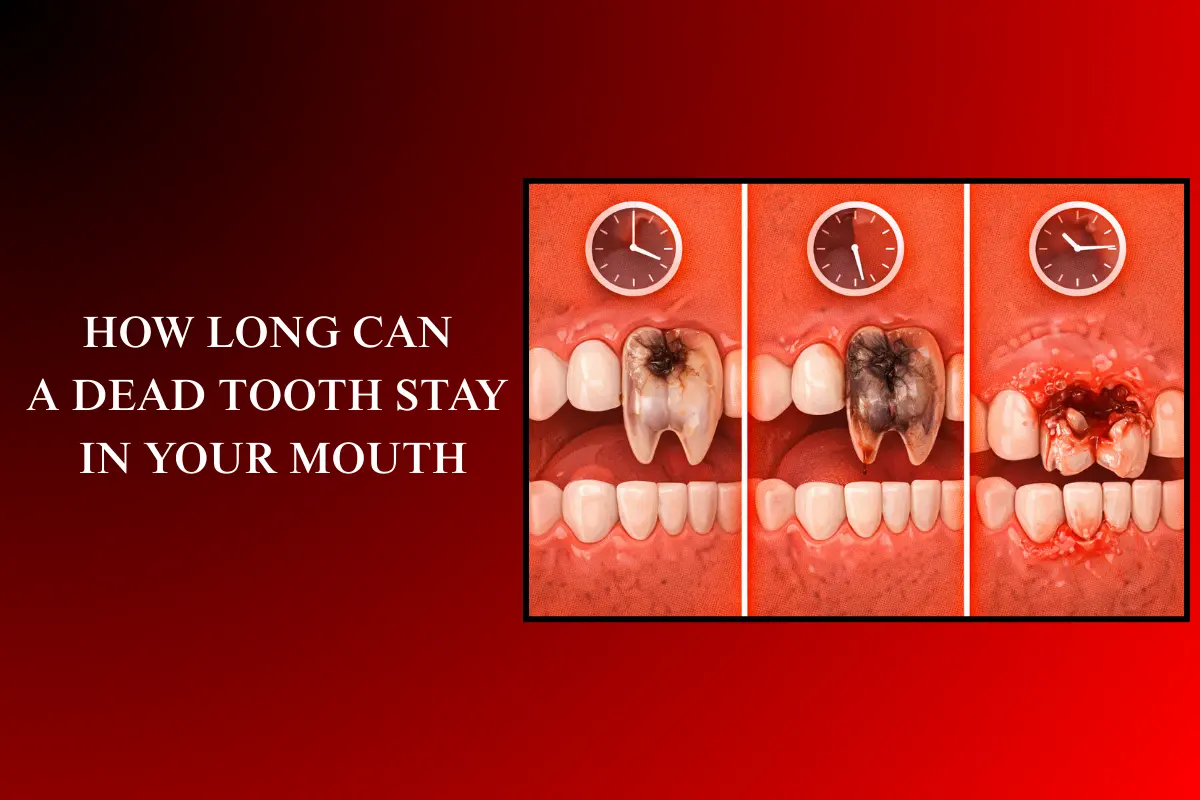
Technically, a dead tooth can remain in your jaw for months or even years, but it is a “ticking time bomb.” There is no set biological timer that ejects a dead tooth; instead, the timeline is dictated by infection.
- The Quiet Phase: A tooth may stay quiet for months with no pain, only showing a slight grey or yellow discolouration.
- The Infection Phase: Eventually, bacteria will invade the dead pulp. Once an abscess forms at the base of the root, the tooth must be treated within days to prevent the infection from spreading to the jawbone or bloodstream
The Risks of Leaving a Dead Tooth Untreated
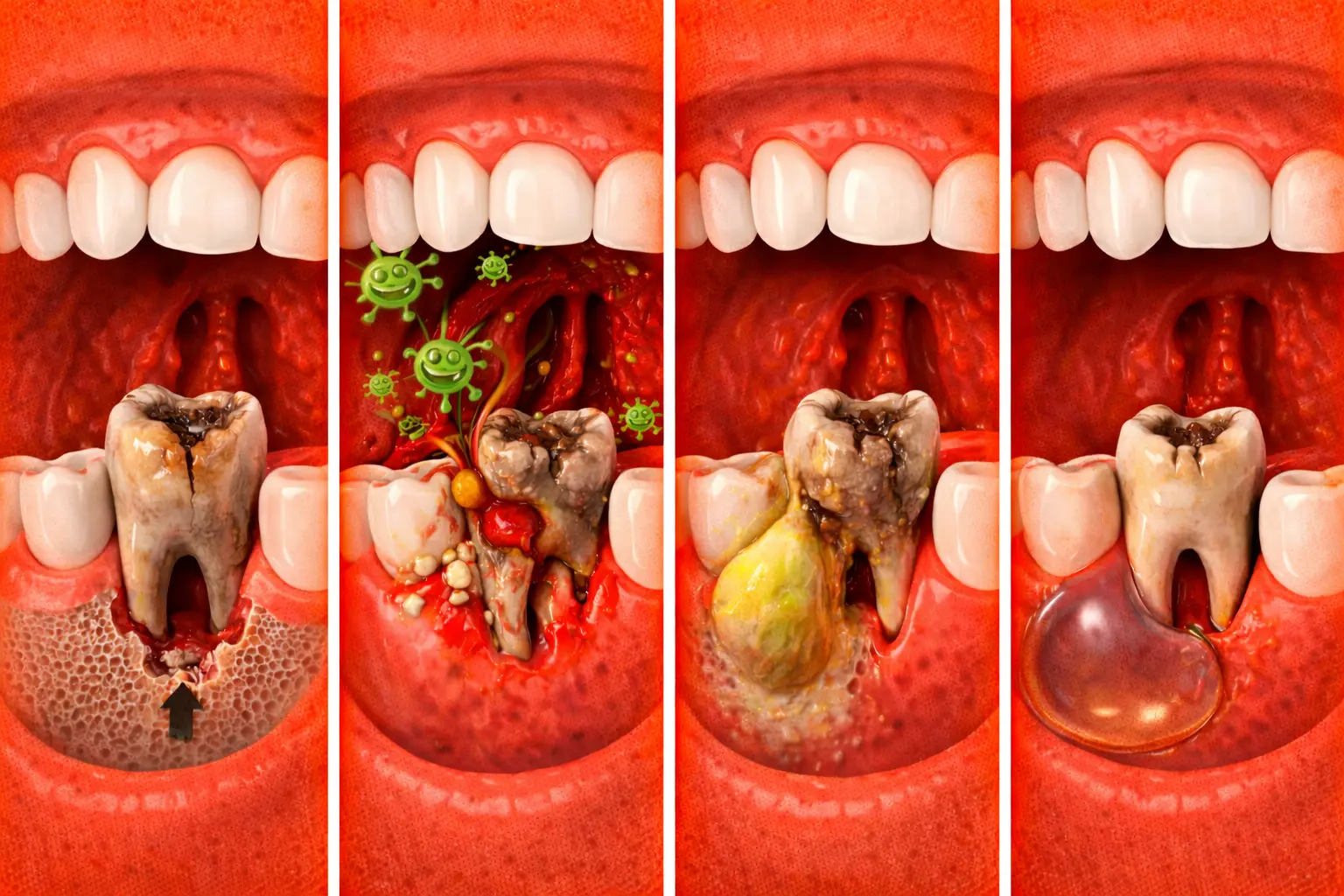
Choosing to ignore a dead tooth because “it doesn’t hurt” is a common mistake. Patients should be aware of these risks:
- Dental Abscess: A painful collection of pus at the root tip that can cause facial swelling.
- Bone Loss: Chronic infection eats away at the jawbone surrounding the tooth, making future dental implants difficult.
- Tooth Loss: The longer the infection lingers, the less likely a dentist can save the tooth with a root canal.
- Systemic Infection: In rare cases, bacteria from a dead tooth can travel to the heart or brain, becoming life-threatening.
Symptoms Comparison: Vital vs. Non-Vital Tooth
| Symptom | Healthy (Vital) Tooth | Dead (Non-Vital) Tooth |
|---|---|---|
| Colour | White/Off-white | Grey, dark yellow, or light brown |
| Temperature | Feels hot and cold | No sensation to temperature |
| Pain | Sharp, temporary sensitivity | Dull ache or intense throbbing (if abscessed) |
| Gums | Firm and pink | May have a “pimple” (fistula) or swelling |
Treatment Options: Saving vs. Removing
When you visit our dental clinics, we prioritize saving your natural smile. The treatment depends on the structural integrity of the tooth:
- Root Canal Treatment:
- The dentist removes the dead pulp and cleans the canals.
- The tooth is sealed and usually topped with a crown for strength.
- This is the preferred way to keep a dead tooth in your mouth safely.
- Tooth Extraction:
- If the tooth is too cracked or decayed, it must be removed.
- We then discuss replacement options like dental bridges or implants.
Why Choose Night and Day Emergency Dentist for a Dead Tooth?
A dead tooth often transitions from “painless” to “agony” in the middle of the night. Night and Day Emergency Dentist provides the urgent care you need:
- Rapid Pain Relief: We specialize in emergency pulp extirpations to stop abscess pain instantly.
- Advanced Diagnostics: We use digital X-rays to see exactly how far an infection has spread into the bone.
- State-of-the-Art Clinics: Our North West and West Yorkshire locations are equipped for complex root canals and surgical extractions 24/7.
- Peace of Mind: We don’t just treat the tooth; we explain the “why” to ensure you feel confident in your treatment plan.
FAQs: How Long Can a Dead Tooth Stay in Your Mouth?
Conclusion
The answer to how long can a dead tooth stay in your mouth isn’t “until it falls out”, it’s “until it becomes a health risk.” Early treatment is the difference between a simple root canal and a costly extraction.
If you have a tooth that is changing colour or a persistent bad taste in your mouth, contact Night and Day Emergency Dentist. We serve the communities around the clock to ensure your smile stays healthy and safe.