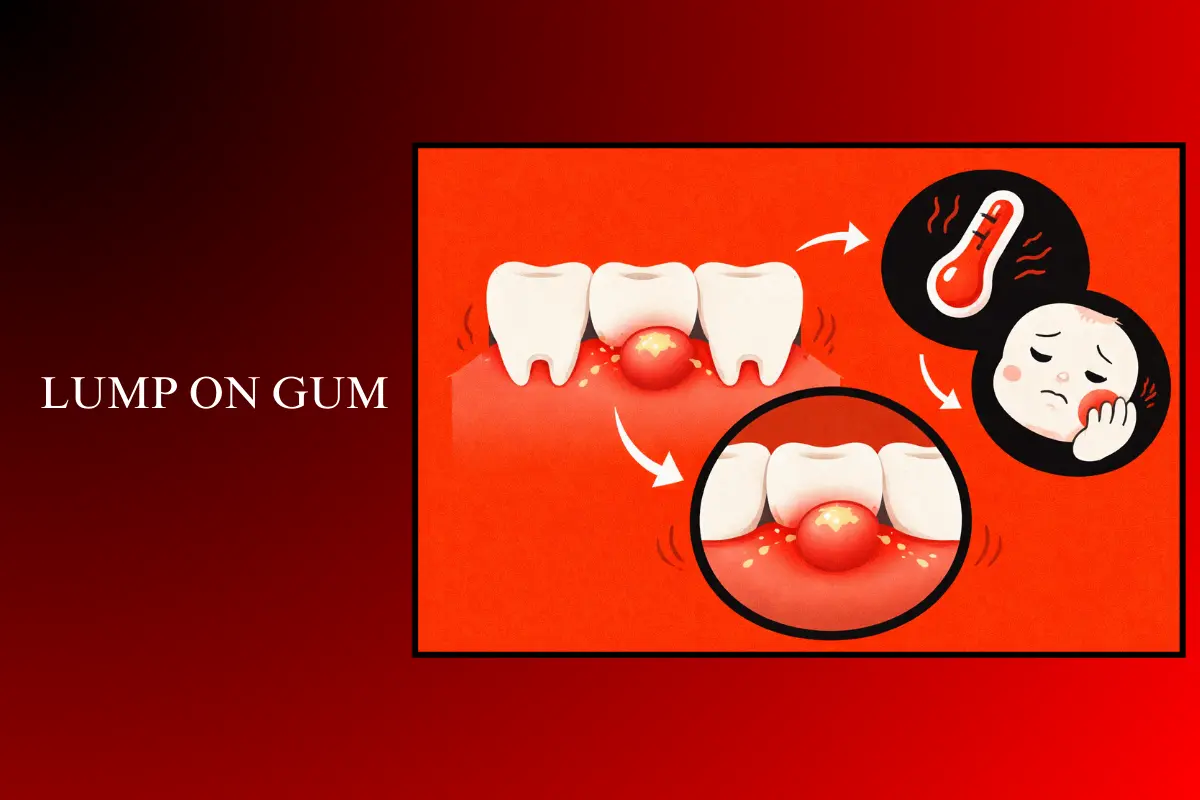
Finding a mysterious lump on gum tissue can be an unsettling experience. Whether it appeared overnight or has been slowly growing for months, your mind likely jumps to two questions: What is it? and Is it an emergency?
At Night and Day Emergency Dentist, we see patients every day who are concerned about new growths in their mouths. The good news is that many of these lumps are harmless. However, because some can signal a serious infection or an underlying health issue, understanding the “why” behind that bump is crucial for your peace of mind and your oral health.
Short Summary
- A lump on the gum can be infectious (abscess), traumatic (fibroma), or developmental (bony growth), and its appearance often indicates the underlying cause.
- Painless lumps like dental cysts or fibromas grow slowly and are often benign, but they still require evaluation to prevent long-term jawbone damage.
- A painful, pus-filled lump, often called a “gum boil”, is usually a sign of a bacterial abscess and constitutes a dental emergency that requires immediate treatment.
- Red flags such as spontaneous bleeding, rapid growth, or patches that don’t heal within 14 days should be professionally examined to rule out oral cancer.
- Early diagnosis through X-rays or visual exams in Manchester and Leeds ensures that minor irritations don’t escalate into serious systemic infections.
What Exactly is That Lump on My Gum?
A lump on gum (often called a gum bump) can vary significantly in appearance. It might be soft and squishy, hard and bony, or even look like a small red pimple. In the dental world, we categorise these based on their “search intent”—or rather, what your body is trying to tell us.
Most lumps fall into one of three categories:
- Infectious: Caused by bacteria (like a gum boil or abscess).
- Traumatic/Reactive: Caused by irritation (like a fibroma from a sharp tooth).
- Developmental: Natural bony growths (like tori).
While it is tempting to “wait and see,” any new growth in the mouth that doesn’t resolve within two weeks should be professionally evaluated.
Common Causes of a Painless Lump on Gum
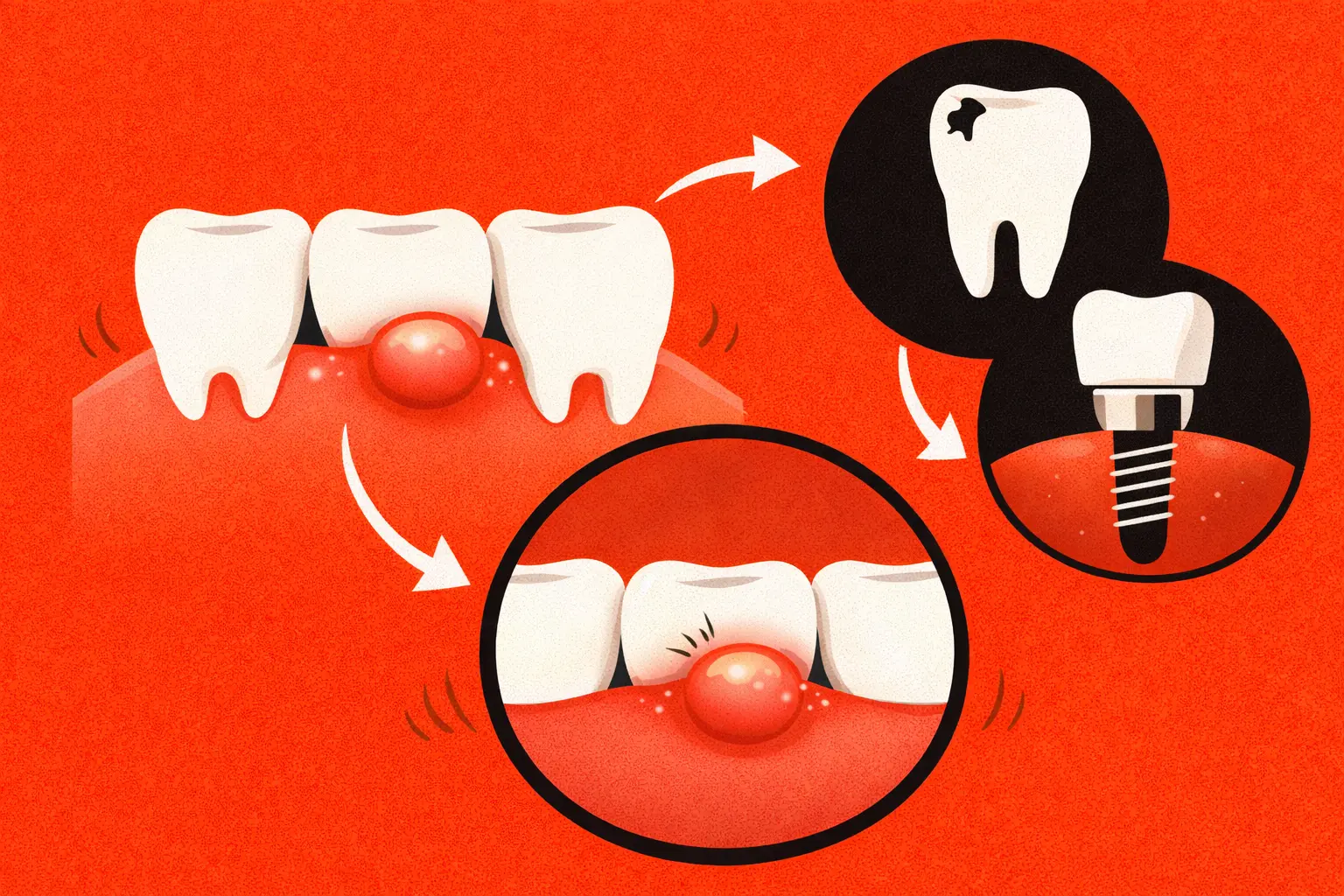
Many patients are surprised to find a lump on gum that doesn’t hurt at all. While the lack of pain is a relief, it doesn’t always mean the area is healthy. Here are the most common non-painful culprits:
-
Dental Cysts
A dental cyst is a small, fluid-filled sac that typically forms around the roots of dead or buried teeth. They grow very slowly and are usually painless unless they become infected. If left untreated, a cyst can put pressure on your jawbone and eventually weaken it.
-
Oral Fibroma
This is perhaps the most common cause of a firm, dome-shaped lump on gum. A fibroma is non-cancerous and acts much like a “callus” on the skin. It usually develops because of chronic irritation—perhaps from a sharp edge of a filling, an ill-fitting denture, or a habit of biting your cheek.
-
Bony Growths (Tori)
If the lump feels “rock hard” and is located on the tongue-side of your lower jaw or the roof of your mouth, it might be a torus. These are simply extra growths of normal bone. They are harmless and only require treatment if they interfere with speech or the fit of a denture.
-
Pyogenic Granuloma
Often seen in pregnant women due to hormonal changes, these appear as red, soft lumps that bleed easily. Despite the scary name, they are benign and often shrink on their own after pregnancy.
When a Lump on Gum Becomes a Dental Emergency
If your lump on gum is accompanied by throbbing pain, it is often a sign of a bacterial infection. This is where we shift from “monitoring” to “urgent care.”
The Dental Abscess (Gum Boil)
A periodontal abscess is a collection of pus caused by an infection in the space between the tooth and the gum.
- Symptoms: Intense pain, a foul taste in the mouth, facial swelling, and sometimes a fever.
- The Risk: If an abscess is left untreated, the infection can spread to other parts of the face or even the bloodstream.
If you have a painful, pus-filled lump on gum, you should contact an emergency dentist immediately. Do not attempt to “pop” it at home, as this can force the bacteria deeper into your tissues.
Get Immediate ReliefIs it Mouth Cancer? Understanding the Red Flags
We understand that “cancer” is the first word many people think of when they find a lump. While most gum bumps are benign, oral cancer can present as a persistent lump on gum or a sore that won’t heal.
Watch for these “Red Flag” symptoms:
- A lump that bleeds on gums spontaneously.
- White or red patches on the gums that don’t rub off.
- A lump that has grown rapidly in size.
- Numbness in the lip or chin.
- A persistent sore throat or difficulty swallowing.
Early detection is the most important factor in successfully treating oral cancer. If a lump hasn’t moved or healed in 14 days, a quick biopsy or examination can provide the answers you need.
How Dentists Diagnose and Treat Gum Lumps
When you visit us at Night and Day Emergency Dentist, our first goal is to determine the “semantic” nature of the growth. We use several diagnostic tools:
- Visual Exam: Checking the colour, texture, and location.
- Digital X-rays: To see if the lump is connected to a tooth root or the jawbone.
- Aspiration or Biopsy: If the lump is fluid-filled, we may drain a small amount to test it. If it’s solid and suspicious, a tiny tissue sample is sent for analysis.
Treatments range from:
- Deep Cleaning: If the lump is caused by gum disease.
- Root Canal Therapy: If the lump is an abscess caused by a dying tooth.
- Surgical Removal: For cysts or fibromas that are causing discomfort.
- Observation: For harmless bony growths like tori.
FAQs About Gum Lumps
Conclusion
Finding a lump on gum tissue is your body’s way of asking for attention. Whether it is a simple case of irritation or a sign of a deeper infection, getting a professional diagnosis is the only way to ensure your health isn’t at risk.
At Night and Day Emergency Dentist, we provide expert care for all dental concerns, from painless cysts to urgent infections. If you are worried about a new growth or experiencing dental pain, don’t wait. Contact our team today for a comprehensive examination. Your smile—and your peace of mind—are worth it.