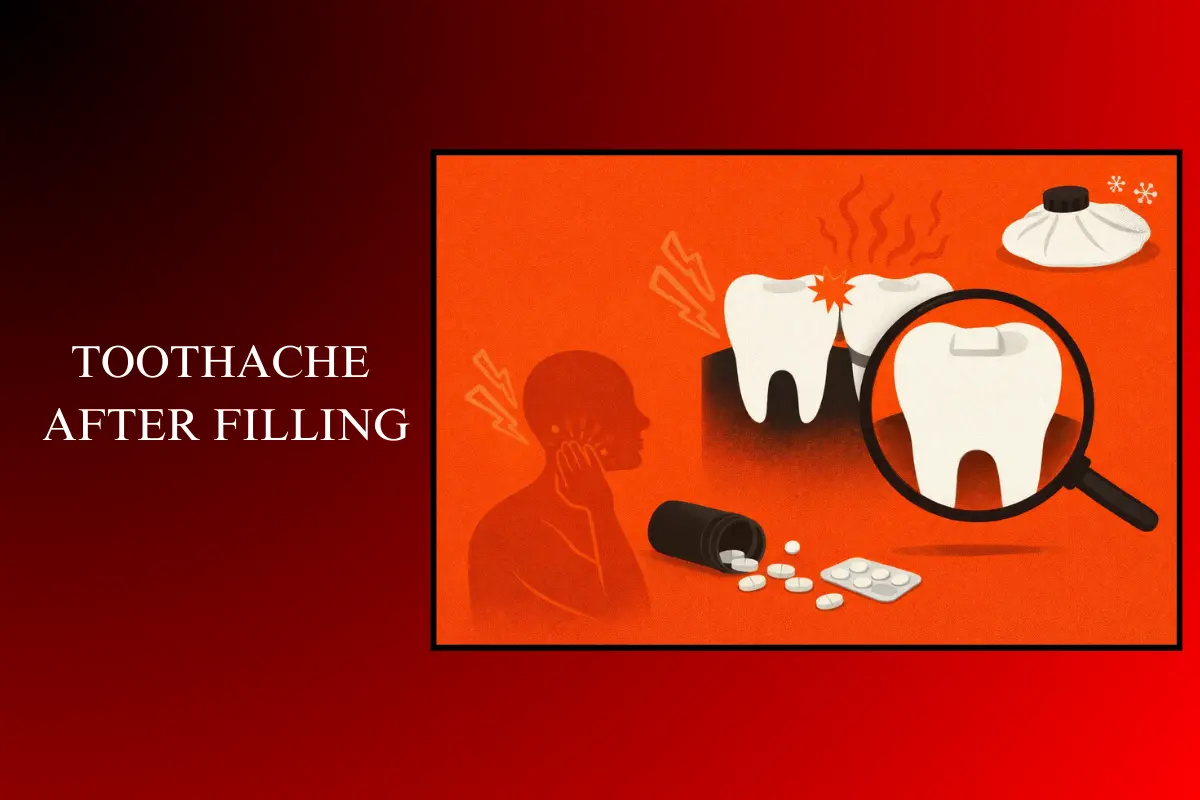
Experiencing a toothache after filling a cavity is one of the most common reasons patients call our emergency line. You went to the dentist to stop the pain, so it feels counterintuitive and a bit frustrating when you leave the chair only to feel a new kind of discomfort.
At Night and Day Emergency Dentist, we want to reassure you that most post-filling sensitivity is completely normal. However, knowing the difference between a settling nerve and a genuine dental emergency is key to your recovery.
Short Summary
- Post-filling sensitivity is common and usually stems from the nerve reacting to the “trauma” of the procedure; it typically settles within 24–48 hours.
- A “high filling” is a frequent cause of pain; if the bite is even slightly misaligned, it creates excessive pressure and sharp pain when chewing.
- Deep cavities can lead to pulpitis (nerve inflammation), which may be reversible with time or require further treatment if the damage is permanent.
- Managing mild discomfort at home involves using desensitising toothpaste, avoiding temperature triggers, and taking anti-inflammatory medication.
- Urgent dental care is necessary if you experience throbbing pain that prevents sleep, visible facial swelling, or sensitivity to heat, which can indicate a dying nerve.
Is a Toothache After Filling Normal?
It is very common to experience a toothache after filling a tooth, especially within the first 24 to 48 hours. Think of a dental filling as a minor surgery on your tooth. Your dentist has used a high-speed drill to remove decayed tissue, which can irritate the “pulp”, the bundle of nerves and blood vessels inside your tooth.
Most patients describe this as a sharp zing when eating cold foods or a dull ache as the local anesthetic wears off. In the vast majority of cases, this is simply the nerve reacting to the “trauma” of the procedure and will settle down on its own.
Common Causes of Pain After a Dental Filling
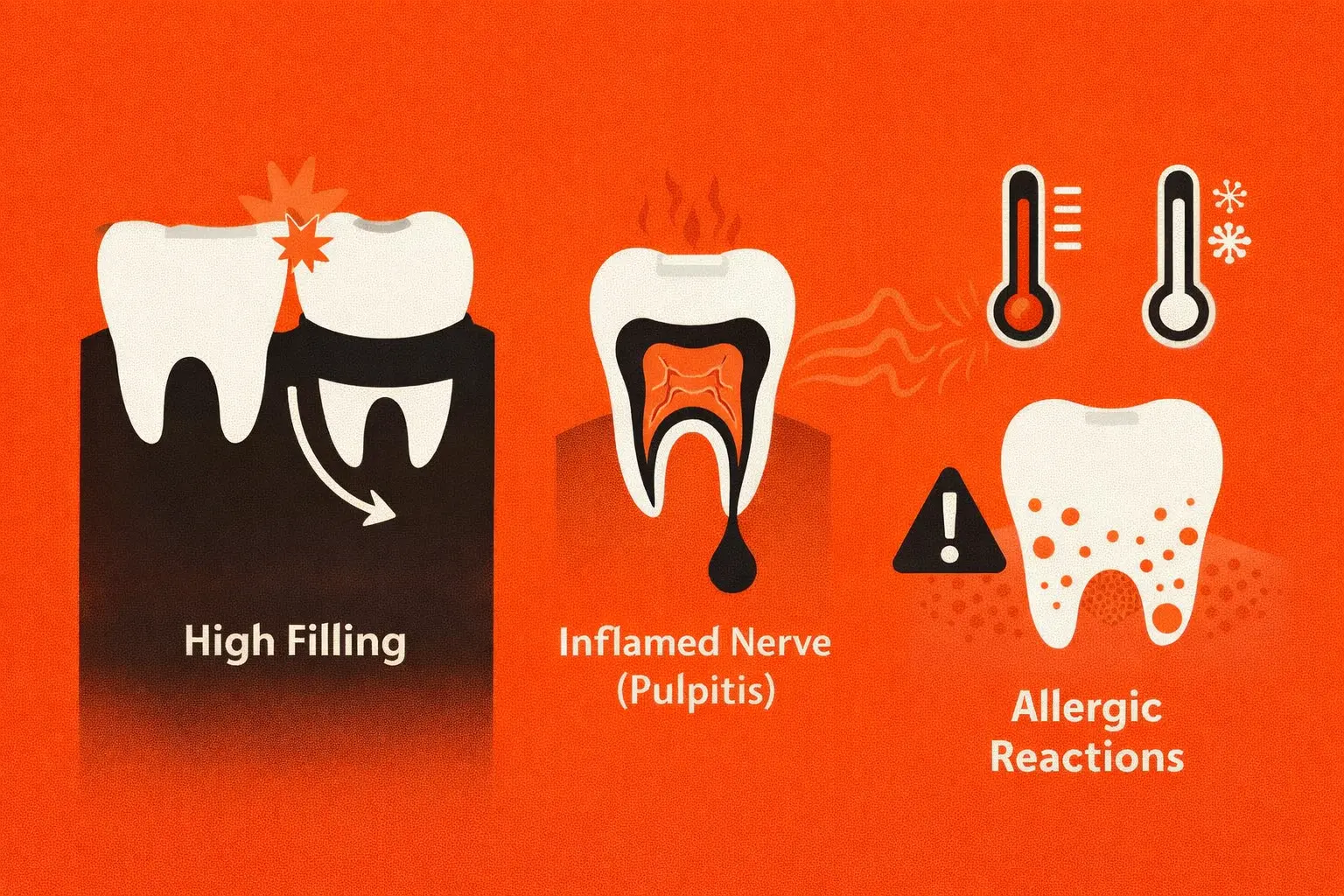
If your discomfort lasts longer than a few days, or if the sensation feels “off,” it is usually due to one of the following four reasons:
-
High Filling (Bite Misalignment)
This is perhaps the most frequent cause of a toothache after filling. If the filling material is even a fraction of a millimeter too high, it hits the opposing tooth first when you bite down. This puts excessive pressure on that single tooth, leading to inflammation and sharp pain when chewing.
-
Pulpitis (Inflamed Nerve)
Deep cavities often sit very close to the nerve. Even after the decay is gone, the nerve can become inflamed (pulpitis).
- Reversible Pulpitis: The nerve is irritated but will heal with time.
- Irreversible Pulpitis: The nerve is too damaged to recover, often requiring a root canal.
-
Sensitivity to Temperature
Composite (white) fillings can sometimes cause temporary sensitivity to hot and cold. This happens because the material can conduct temperatures differently than your natural enamel, or there may be a tiny gap where the material has slightly shrunk during the curing process.
-
Allergic Reactions
While rare, some patients may experience a toothache after filling due to an allergy to the materials used, particularly with older silver (amalgam) types of fillings.
How to Manage a Toothache After Filling at Home
If your pain is mild, you can usually manage it without an emergency visit:
- Desensitizing Toothpaste: Switch to a brand like Sensodyne for a few weeks to block pain signals.
- Avoid Triggers: Steer clear of ice-cold drinks, very hot coffee, and crunchy foods on the side of the new filling.
- Over-the-Counter Relief: Ibuprofen or paracetamol can help reduce the inflammation of the nerve.
- Check Your Bite: If you feel like your teeth aren’t “meeting” properly, this isn’t something you can fix at home, you’ll need a quick adjustment from your dentist.
When Should You Call an Emergency Dentist?
While a minor toothache after filling is expected, certain symptoms suggest that the tooth needs immediate professional attention. You should contact us at Night and Day Emergency Dentist if you experience:
- Extreme Sensitivity to Heat: While cold sensitivity is common, lingering pain after drinking something hot often indicates a dying nerve.
- Visible Swelling: Any swelling in the gums or face is a sign of infection or an abscess.
- A “High” Bite: If you cannot chew comfortably after 3 days, your filling needs to be smoothed down to prevent permanent nerve damage.
- Throbbing Pain: If the pain is keeping you awake at night and doesn’t respond to painkillers.
FAQs About Post-Filling Pain
Conclusion
Having a toothache after filling doesn’t necessarily mean the treatment failed. In most cases, your tooth just needs a little time to recover from the “work” it underwent. However, your comfort is our priority.
If you are worried that your bite is uneven, or if the pain is becoming unbearable, don’t suffer in silence. At Night and Day Emergency Dentist, we specialize in diagnosing post-treatment complications and providing the relief you need to get back to your day.