Missing teeth can make everyday life harder than it needs to be. Chewing is a struggle, smiling feels awkward, and even chatting with friends or family might make you a bit self-conscious.
The good news? Modern dentistry offers several types of dentures to help you eat, speak and smile more comfortably again – and they’re far better than the bulky “false teeth” many people imagine.
In this guide, we’ll walk through the main denture options available today, what each one is best for, and what patients in Manchester and Leeds should consider when choosing between them. This isn’t a one-size-fits-all decision, but by the end you’ll know the right questions to ask your dentist.
Short Summary
- Modern dentures are highly customisable oral appliances designed to restore your ability to eat, speak, and smile with confidence.
- Options range from traditional full and partial dentures to flexible dentures and highly stable implant-supported solutions.
- Choosing the right type depends on how many teeth are missing, your budget, and your preference for a removable or fixed result.
- Unlike “false teeth” of the past, today’s dentures use materials like acrylic, nylon, or metal to ensure a more natural look and comfortable fit.
- Emergency dental services in Manchester and Leeds provide essential support for sudden denture breaks, sharp edges, or painful sore spots.
What Are Dentures – and Why Are There Different Types?
Dentures are removable oral appliances that replace missing teeth in your upper jaw, lower jaw, or both. A dental technician makes them from materials like acrylic, resin, metal or nylon, shaped to fit your gums and restore your bite and smile.
There isn’t just one standard denture because:
That’s why you’ll hear terms like full dentures, partial dentures, immediate dentures, flexible dentures, implant-supported dentures and more.
What Are the Main Types of Dentures Available Today?
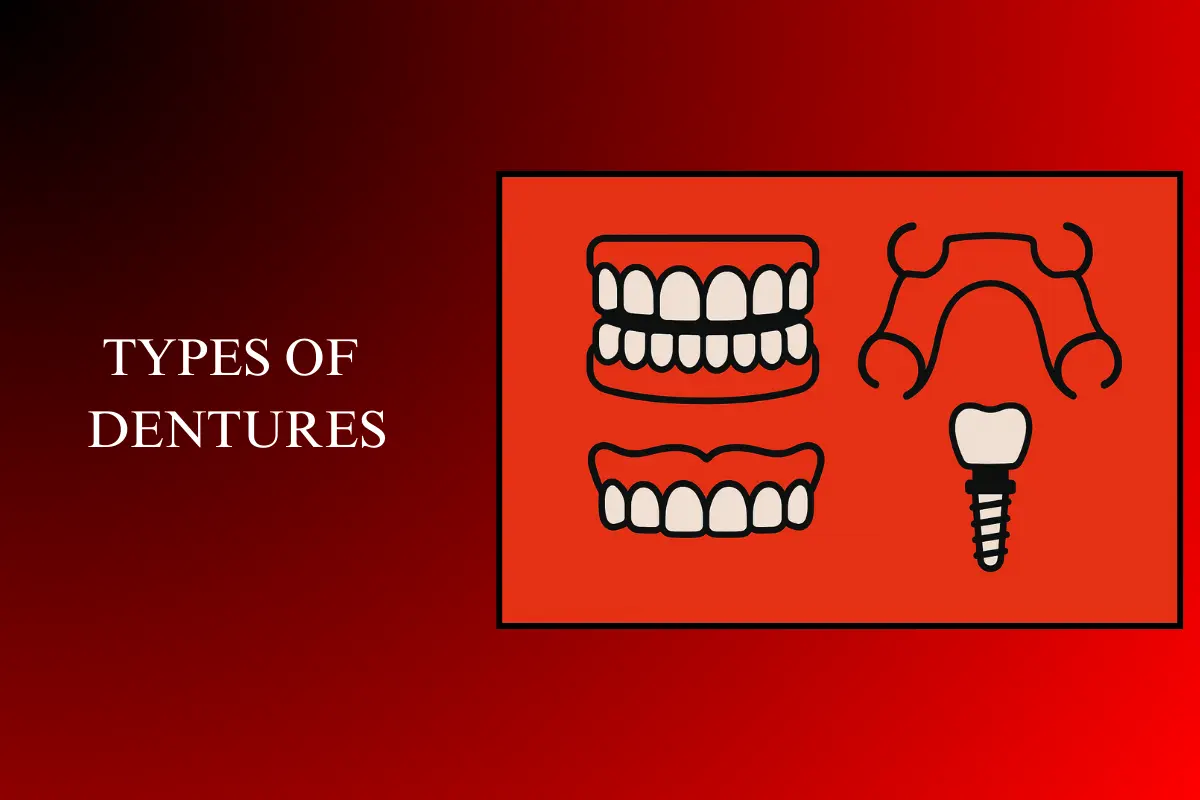
In simple terms, the main types of dentures you’ll come across are:
Types of Dentures: Quick Comparison
| Type | Replaces | Fixed or Removable? | Typical Stability | Cost Level* | Good for… |
|---|---|---|---|---|---|
| Complete dentures | All teeth in a jaw | Removable | Moderate | £ | Full tooth loss without implants |
| Partial dentures | Several missing teeth | Removable | Moderate | £ | Multiple gaps with some teeth remaining |
| Immediate dentures | Teeth being extracted now | Removable | Moderate (changes as gums heal) | £ | Avoiding a “toothless” period |
| Flexible dentures | Some or all teeth | Removable | Moderate | ££ | Extra comfort or acrylic sensitivity |
| Implant-retained dentures | Many / all teeth | Removable (clip-on) | High | ££–£££ | Extra stability & chewing power |
| Fixed implant-supported (e.g., All-on-4) | Full arch | Fixed (by dentist) | Very high | £££ | Long-term fixed full-arch solution |
*Cost level is relative and varies between practices and treatment plans.
Let’s look at each in a bit more detail.
Types of Dentures vs Budget and Lifestyle: Which Option Fits You Best?
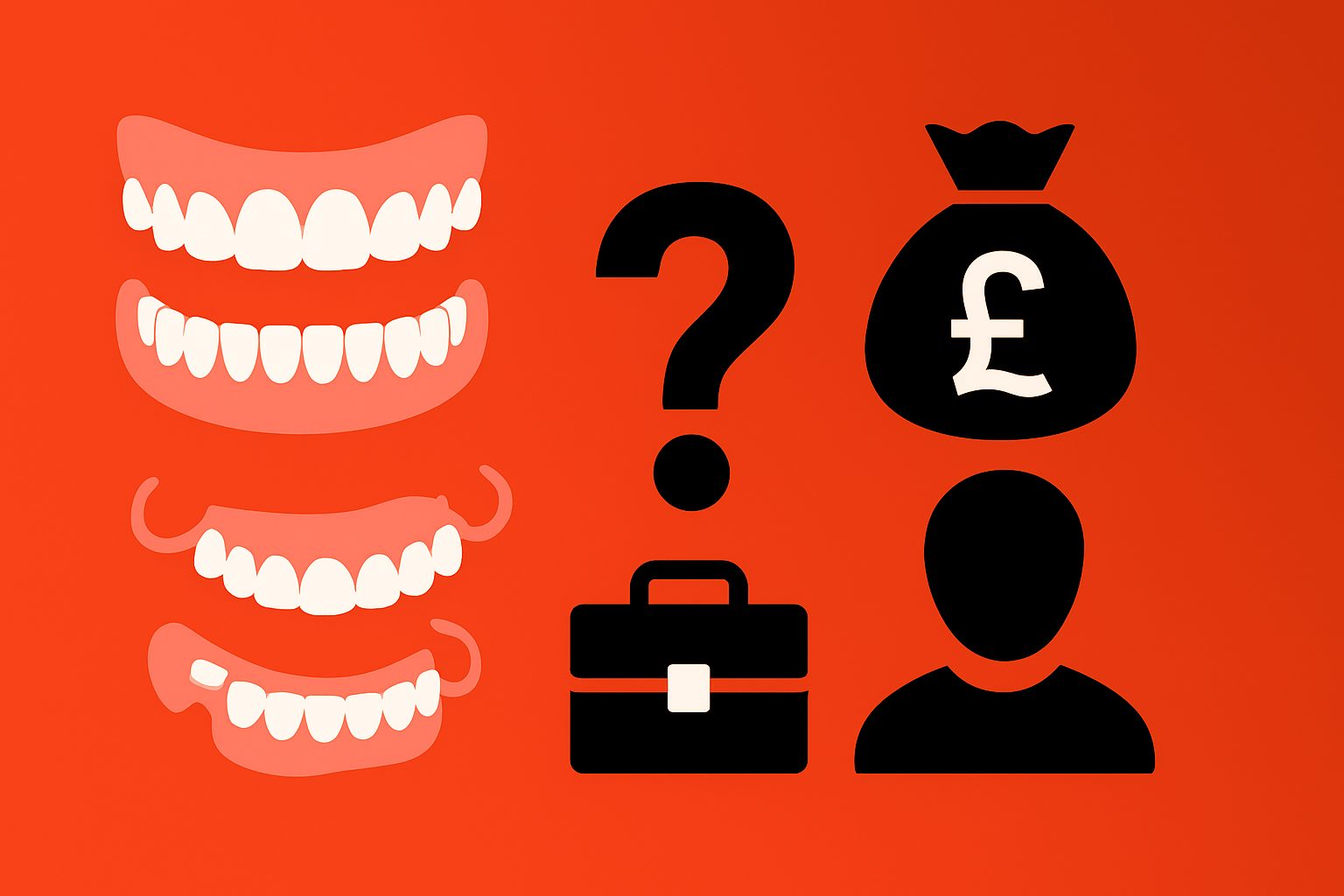
When comparing types of dentures, most people in Manchester and Leeds consider three main things:
- Budget
- Comfort and stability
- Maintenance and lifestyle
A simple framework:
- Budget-friendly options:
- traditional full or partial dentures
- sometimes immediate dentures as part of a treatment plan
- Mid-range options:
- flexible partial dentures
- some implant-retained (snap-in) dentures
- Premium options:
- fixed implant-supported dentures / All-on-4-style solutions
Lifestyle matters too:
- If you drink lots of tea/coffee or smoke, stain-resistant teeth and diligent cleaning are important.
- If your manual dexterity isn’t great, a simpler cleaning routine might be better.
- If you play contact sports, removable options may be safer or you’ll need extra protection.
Why Trust Night and Day Emergency Dentist for Fast Denture Repairs & Pain Relief?
Even the best-made denture can sometimes crack, loosen, or start rubbing painfully – often at the worst possible time.
If you’re in Manchester or Leeds and you:
- break a denture before work or a social event
- feel a sharp edge cutting your cheek or tongue
- have a partial denture clasp snap off
- suddenly find your denture is too sore to wear
Night and Day Emergency Dentist can:
- assess the denture and the soft tissues of your mouth
- smooth sharp areas or make temporary adjustments where appropriate
- advise on when and how a proper repair or remake is needed
- help you stay comfortable and confident until a longer-term solution is in place.
Having an emergency service available means you’re not left struggling with a painful or unwearable denture for days.
Schedule Your Visit TodayHow Are Dentures Made – and What Can You Expect During the Process?
Although details vary, most denture journeys follow similar steps:
It’s normal for dentures to need minor tweaks in the first few weeks. Always let your dentist know if you have sore spots rather than “pushing through” the pain.
Pros and Cons of Different Types of Dentures at a Glance
Full Dentures
- Pros: affordable full-arch solution, non-surgical, widely available
- Cons: can loosen over time, may need adhesive, adaptation period
Partial Dentures
- Pros: fill multiple gaps, removable for cleaning, cheaper than bridges/implants
- Cons: visible clasps, can feel bulky, rely on remaining teeth
Flexible Dentures
- Pros: softer and comfortable for many, no metal clasps
- Cons: harder to adjust/reline, may stain
Implant-retained / Snap-in Dentures
- Pros: more stable, better chewing, less adhesive needed
- Cons: higher cost, surgery required, need sufficient bone
Fixed implant-supported Dentures
- Pros: closest feel to fixed teeth, excellent stability and function
- Cons: premium cost, more complex treatment, meticulous cleaning needed
FAQs About Types of Dentures
Conclusion
Understanding the different types of dentures is the first step toward finding a solution that helps you eat, speak, and smile with confidence again.
- Full and partial dentures offer effective, affordable tooth replacement.
- Flexible dentures and custom/cosmetic dentures can improve comfort.
- Implant-retained and implant-supported dentures provide extra stability and a more fixed feel.
If you’re in Manchester or Leeds and wondering which option fits your mouth, budget and lifestyle, the next step is a consultation with a dentist who can guide you through the choices in person.