The local anesthetic has worn off, the gauze is becoming a nuisance, and you’re starting to wonder exactly how you’re going to get through the next twelve hours. The first night after tooth extraction is the most critical period for your recovery. This is the window where your body is frantically trying to establish a blood clot, the biological “scab” that protects your jawbone and nerves.
At Night and Day Emergency Dentist, we know that most post-extraction anxiety happens after the clinic’s doors have closed. Whether you’ve had a simple extraction or a complex surgical removal, your goal tonight is simple: protect the clot, manage the discomfort, and get some rest. This guide provides a step-by-step roadmap to ensuring your first night is safe and as comfortable as possible.
Short Summary
- The first night is the most critical window for establishing the blood clot, which acts as a biological bandage to protect the underlying jawbone and nerves.
- Protecting this clot is your top priority; strictly avoid negative pressure from straws, smoking, spitting, or early rinsing to prevent a painful dry socket.
- To manage throbbing and minimize swelling, sleep with your head elevated at a 45-degree angle and avoid sleeping directly on the extraction side.
- Stick strictly to a lukewarm or cold liquid diet, avoiding hot liquids, spices, and small grains (like rice) that can easily become trapped in the socket.
- Minor saliva oozing and jaw stiffness are completely normal, but seek immediate emergency dental care for uncontrolled bleeding, fever, or difficulty swallowing.
What Should I Expect During The First Night After Tooth Extraction?
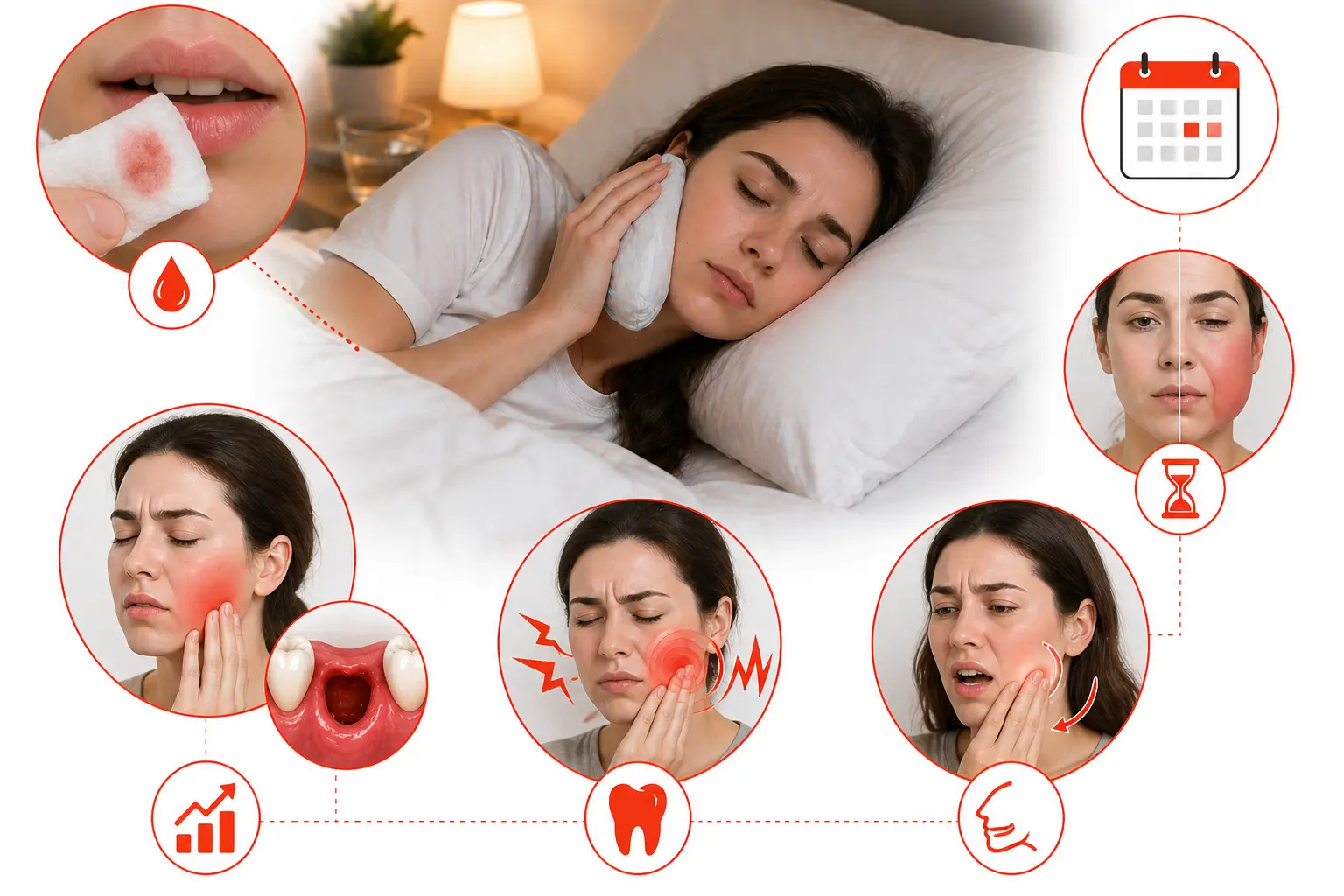
The first few hours after surgery are a biological whirlwind. Understanding what is “normal” can prevent unnecessary panic.
- Minor Oozing: Expect some pink-tinged saliva. This is not active bleeding; a tiny amount of blood mixed with saliva looks like a lot more than it is.
- Swelling Peak: Swelling usually starts on the first night and actually peaks around day two or three.
- The “Throb”: As the anesthesia leaves your system, you may feel a dull, rhythmic throb. This is your inflammatory response beginning the healing process.
- Jaw Stiffness: You might find it difficult to open your mouth fully, especially if it was a molar or wisdom tooth extraction.
How Can I Manage Bleeding And Protect The Blood Clot?
Protecting the blood clot is your #1 priority during the first night after tooth extraction. If this clot dislodges, you risk developing “Dry Socket” (Alveolar Osteitis), which is significantly more painful than the extraction itself.
The Gauze Protocol
- Bite Firmly: Keep the original gauze in place for at least 30–60 minutes after leaving the surgery.
- Don’t “Check” Constantly: Peeking at the wound every five minutes disrupts the clotting process.
- The Tea Bag Trick: If oozing persists, bite down on a moistened caffeinated black tea bag. The tannic acid helps constrict blood vessels and encourages clotting.
What to Avoid (Suction is the Enemy)
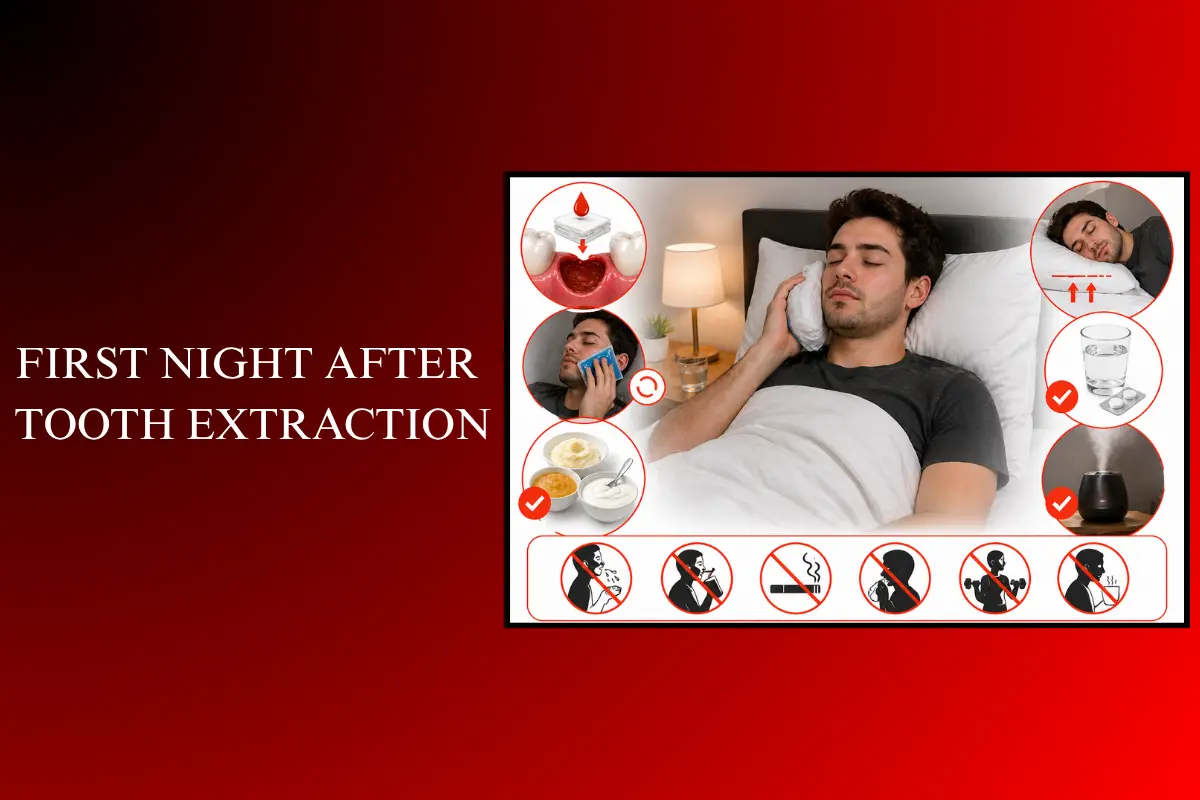
- No Straws: The vacuum created by a straw can literally suck the clot out of the socket.
- No Spitting: Use a tissue to wipe your mouth rather than spitting forcefully.
- No Rinsing: Avoid the urge to rinse your mouth tonight; wait at least 24 hours before starting gentle saltwater soaks.
What Is The Best Position For Sleeping The First Night After Tooth Extraction?
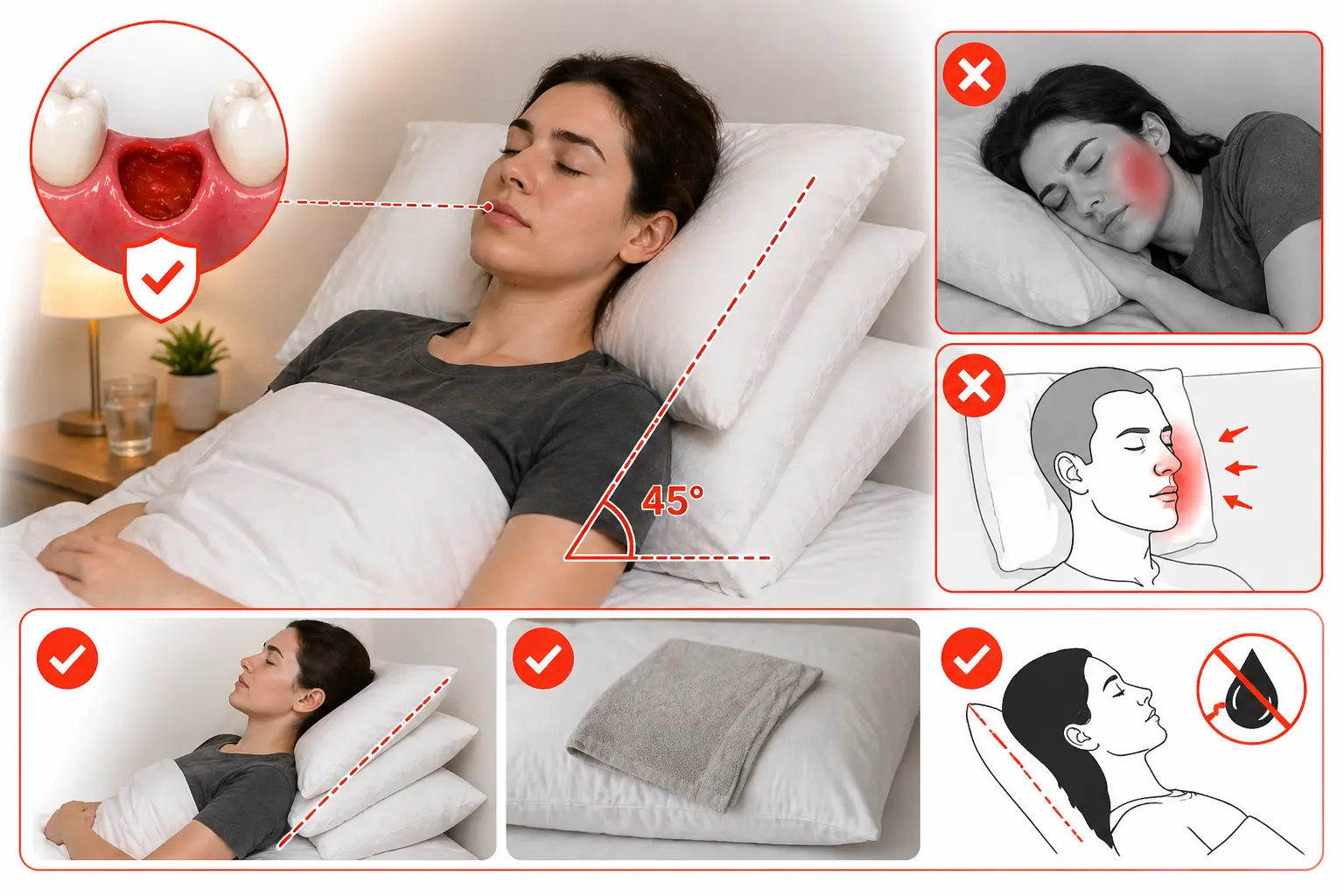
One of the most frequent questions we receive is how to sleep first night after tooth extraction. Lying flat increases blood pressure in the head, which can lead to increased throbbing and prolonged bleeding.
- Elevate the Head: Use two or three pillows to keep your head propped up at a 45-degree angle.
- Stay Off the Extraction Side: Avoid sleeping on the side where the tooth was removed. The warmth of the pillow against your cheek can increase swelling and blood flow to the area.
- Old Pillowcase: It is common to drool slightly during the first night. Use an old pillowcase or lay a towel down to avoid staining your bedding.
Your First Night Recovery Checklist
| Factor | Enlighten Evolution | Standard Pro Whitening | OTC Whitening Kits |
|---|---|---|---|
| Guaranteed Result | Yes (VITA Shade B1) | No (Varies by patient) | No |
| Sensitivity Level | Very Low (Included desensitizers) | Moderate to High | Variable |
| Treatment Time | 15 Days | 1-2 Hours (In-chair) | Weeks to Months |
| Dietary Restrictions | None (No “White Diet” needed) | Strict (Avoid coffee/wine) | Strict |
| Longevity | Permanent (With maintenance) | 6–12 Months | Temporary |
What Should I Eat And Drink During The First Night?
Your body needs fuel to heal, but the wrong food can cause a dental emergency.
The “Safe” List
- Lukewarm Blended Soups: Avoid anything hot, as heat can dissolve the clot.
- Greek Yogurt or Smoothies: Packed with protein and soothingly cold.
- Mashed Avocado: Nutrient-dense and requires zero chewing.
- Apple Sauce: Non-acidic and easy on the stomach if you’re taking painkillers.
The “Forbidden” List
- Rice and Small Grains: These can easily fall into the extraction socket and cause infection.
- Spicy Foods: Capsaicin will irritate the raw tissue and cause intense stinging.
- Alcohol: Alcohol thins the blood and can interfere with your medication.
- Crunchy/Crispy Foods: Crisps or toast act like sandpaper on a fresh wound.
How Do I Manage Pain And Swelling Effectively?
Don’t wait for the pain to become unbearable before taking action. The goal of the first night after tooth extraction is “pre-emptive” pain management.
- Stay Ahead of the Pain: Take your first dose of painkillers before the local anesthetic has completely worn off. This prevents the “pain spike” and dental emergency.
- Ice Pack Routine: Use an ice pack on the outside of your face for 15 minutes on, 15 minutes off. This constricts blood vessels and significantly reduces the inflammatory response.
- Why no Ibuprofen? (Query Response): Some dentists suggest avoiding ibuprofen immediately before or after surgery if the patient has a high risk of bleeding, as it can have a mild blood-thinning effect. However, for most, it is the preferred anti-inflammatory. Always follow your specific dentist’s prescription.
Why You Must Avoid Smoking And Vaping Tonight
If you are a smoker, the first night after tooth extraction will be a challenge. However, smoking is the leading cause of dry socket.
- The Suction: The act of inhaling creates negative pressure that pulls the clot out.
- Chemical Interference: Nicotine constricts blood vessels, reducing the oxygen-rich blood flow needed for the socket to heal.
- Heat: The heat from the smoke can irritate the wound and dissolve the clot.
When Should I Contact An Emergency Dentist?
While most people sail through their recovery, you need to know when “normal” becomes “emergency.” Contact Night and Day Emergency Dentist or your local urgent care if you experience:
- Uncontrolled Bleeding: If you are soaking through a gauze pad every 15 minutes and the “tea bag trick” isn’t working.
- Severe Nausea/Vomiting: Often a reaction to the anesthesia or painkillers.
- Shortness of Breath: This can be an allergic reaction to medication.
- Inability to Swallow: Excessive swelling that interferes with your airway.
- High Fever or Chills: A sign of an immediate systemic reaction or infection.
Why Choose Night and Day Emergency Dentist for Aftercare?
We understand that the first night after tooth extraction can feel lonely and frightening. At Night and Day Emergency Dentist, we don’t just perform the procedure; we provide a safety net.
- 24/7 Availability: We are open when your regular dentist is closed. If your socket starts bleeding at 2 AM, you have a place to go.
- Expert Advice: Our clinicians are specialists in emergency oral surgery, ensuring you get the most accurate advice for your specific situation.
- Calm Environment: We pride ourselves on turning high-stress dental situations into manageable, calm experiences.
- Transparent Care: No jargon, just clear instructions on how to get back to your normal routine as fast as possible.
Frequently Asked Questions
Conclusion
The first night after tooth extraction is a test of patience and care. By keeping your head elevated, avoiding suction, and sticking to a soft diet, you are giving your body the best possible chance to heal quickly.
Remember, tonight is all about the clot. Treat it with care, follow your medication schedule, and rest. If anything feels “off,” or if your pain is not responding to the measures above, Night and Day Emergency Dentist is always available to ensure your recovery stays on track.