Dental emergencies can strike unexpectedly — from a sudden toothache to a chipped or knocked-out tooth during a weekend game. While not every emergency can be avoided, adopting proactive oral care habits can help prevent dental emergencies and reduce your risk. Whether you’re in preventing dental issues saves time, money, and unnecessary discomfort.
Taking care of your teeth isn’t just about a bright smile; it’s about overall health. Your mouth is the gateway to your body, and poor hygiene can lead to infections and gum disease. By knowing the causes and taking preventive steps, you can protect your teeth for years to come.
Key Takeaways: How to Prevent Dental Emergencies At a Glance
- The 6-Month Rule: Scheduling professional dental check-ups and hygiene cleanings every six months reduces the risk of sudden, severe tooth abscesses and hidden decay by over 80%.
- Upgrade Your Safety Gear: Wearing a custom-fitted mouthguard during contact sports prevents up to 60% of athletic dental traumas, including fractured jaws, knocked-out teeth, and severe lip lacerations.
- Stop Using Teeth as Tools: Never use your teeth to rip open packaging, crack nuts, or bite garment tags. This bad habit is a leading cause of suddenly fractured enamel and dislodged dental work.
- Avoid High-Risk Foods: Minimize your intake of exceptionally hard or sticky substances—such as ice cubes, hard candies, popcorn kernels, and caramels—which frequently snap dental bridges, loosen crowns, or crack molars.
- Establish the Right Flossing Grip: Ensure you use proper string flossing mechanics daily (wrapping the floss securely around your middle fingers to leave your index fingers free for steering) to clear plaque from the hidden 40% of tooth surfaces that brushing completely misses.
- Know Your 24/7 Safety Net: Even with perfect prevention, unpredictable structural failures or accidents happen. Knowing a dedicated, fully registered 24-hour emergency service ensures you bypass standard 9-to-5 clinic waiting lists to get instant pain relief and expert restorative repairs at any hour of the day or night.
Common Causes of Dental Emergencies
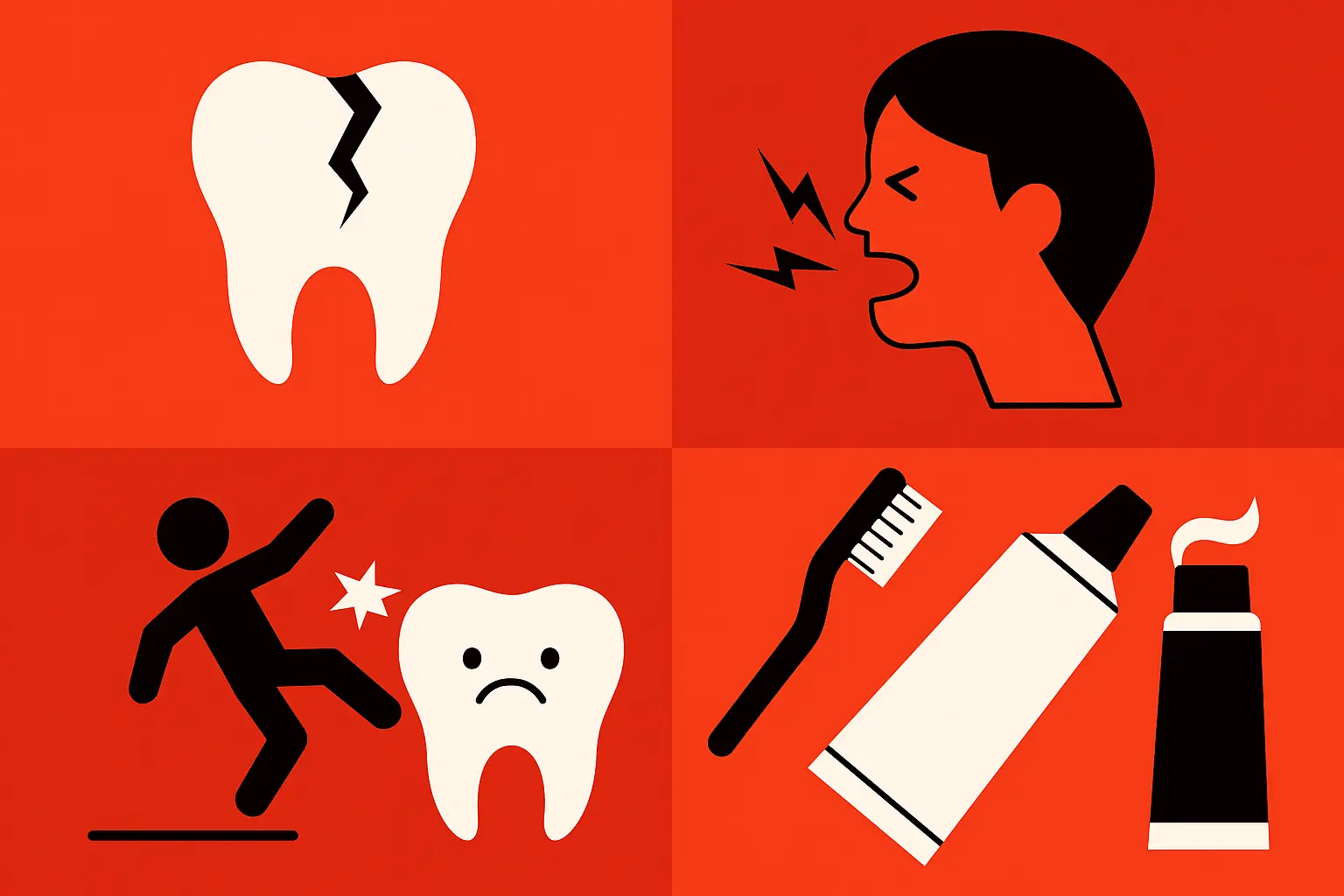
Dental emergencies can occur for many reasons, but some are more common than others:
- Toothaches: Often caused by cavities, infections, or gum problems that are left untreated.
- Chipped or Broken Teeth: Usually the result of accidents, chewing on hard objects, or biting down too forcefully.
- Lost Fillings or Crowns: When a filling or crown falls out, it can expose sensitive tooth tissue to potential damage and infection. Quick dental intervention is necessary to replace the protective covering and avoid further issues.
- Knocked-out Teeth: Common during contact sports or unexpected falls.
- Dental Abscesses: These painful infections develop when bacteria enter the tooth root or gum tissue, often due to neglected dental tooth decay.
Knowing these causes helps you stay alert and take precautions to avoid such situations.
Do you think you have a dental emergency?
If you’re experiencing pain in your teeth or mouth, get in touch with your local dentist as soon as possible. They can book you an emergency appointment or advise what you should do to ease the pain until you can see your dentist.
Night & Day Emergency Dental Care has over 16+ practices across the UK. You don’t always need to be a registered patient to see one of our dentists in an emergency. Contact your nearest practice to find out your options for emergency dental care
. Night & Day Emergency Dentist serving both day & night 24/7 & 365 days a year.
Get Immediate Relief!Why Immediate Care is Important Here (Precautions)
Immediate care in this case is crucial to prevent further damage, alleviate pain, and potentially save a tooth that might otherwise be lost. Addressing dental issues quickly can also stop an infection from spreading, which can lead to more severe health complications if left untreated. Timely intervention not only helps maintain your oral health but also reduces the likelihood of needing more extensive or expensive treatment later on.
Assess the Situation and Act Fast
Quickly assess the severity of the situation. If it involves severe pain, bleeding, or trauma, fast action is crucial to managing the emergency effectively.
Stop the Bleeding
If there’s bleeding, gently press a piece of clean, damp gauze onto the affected area. Maintain steady pressure until the bleeding stops. If bleeding persists for more than 10 minutes, seek immediate medical attention.
Relieve Pain
Over-the-counter pain relievers can temporarily alleviate pain, but avoid aspirin as it may increase bleeding. You can also apply a cold compress to the outside of your cheek to reduce swelling and numb discomfort.
Stabilize Knocked-Out, Cracked, or Loose Tooth
If a tooth is knocked out, handle it by the crown, not the root, rinse it gently if dirty, and try to reinsert it into the socket. If that’s not possible, keep the tooth moist in milk or a tooth preservation product. For cracked or loose teeth, avoid chewing on that side and cover sharp fragments with dental wax to protect your mouth.
Seek Prompt Care for Abscess
An abscess or infection can become serious quickly. Rinse your mouth with mild salt water several times to reduce pain and draw the pus to the surface. See a dentist as soon as possible.
Get Help ASAP from a Professional
Regardless of the situation, contact us immediately for advice and to arrange an urgent appointment. We can provide guidance based on your specific symptoms and ensure you get professional care swiftly to address the emergency.
Tips to Prevent Dental Emergencies
Preventing dental emergencies is easier than you might think. With consistent care and a few smart choices, you can maintain strong and healthy teeth. Here are some detailed tips to help you stay on top of your oral health:
Brush and Floss Regularly
Brushing your teeth twice a day with fluoride toothpaste removes plaque and food particles that lead to cavities and gum disease. Don’t forget to floss daily — it cleans areas your toothbrush can’t reach, preventing buildup that can cause infections or tooth decay.
Wear a Mouthguard
If you participate in sports or any physical activities, protect your teeth with a mouthguard. A custom-fitted mouthguard made by your dentist offers the best protection and comfort. It acts as a cushion, reducing the risk of chipped, broken, or knocked-out teeth during contact sports.
Avoid Hard and Sticky Foods
Chewing on ice, hard candies, or using your teeth to open packages can cause cracks and chips. Sticky sweets, on the other hand, cling to teeth and promote decay. Be mindful of what you eat — your teeth aren’t tools, and avoiding unnecessary strain can save you from painful dental problems later.
Schedule Regular Dental Check-ups
Even if your teeth feel fine, regular dental visits (at least twice a year) are essential. Dentists can detect early signs of decay, gum issues, or alignment problems that might lead to future emergencies. Preventive care is always less expensive — and less painful — than emergency treatment.
Maintain a Healthy Diet
A balanced diet rich in calcium, vitamin D, and phosphorus supports strong enamel and gums. Reduce your intake of sugary foods and beverages, as they can erode enamel and create a breeding ground for bacteria.
Address Dental Issues Promptly
If you notice sensitivity, bleeding gums, or pain while chewing, don’t ignore it. Early treatment can prevent a minor issue from becoming a serious emergency.
Why Choose Night and Day Emergency Dentist?
Despite your best efforts to prevent dental emergencies, they can still happen. That’s where Night and Day Emergency Dentist 24/7 online Emergency Dental Serving | Acton, Sunderland, Bristol & Other Clinics:
24/7 Emergency Care: Available around the clock for urgent dental problems.
Experienced Dental Team: Skilled professionals ready to handle any emergency with care and precision.
Same-Day Treatment: Quick relief for toothaches, broken teeth, or other sudden issues.
Pain Relief and Smile Restoration: We focus on getting you comfortable and confident again — fast.
Frequently Asked Questions
Conclusion
Preventing dental emergencies begins with everyday habits — brushing, flossing, eating wisely, and visiting your dentist regularly. Simple steps today can protect your smile tomorrow. And if an emergency does happen, It is ready to provide prompt, professional care whenever you need it.