The decision to straighten your teeth is rarely just about aesthetics it is about confidence, oral health, and the long-term investment in your self-image. However, the most frequent question in our consultation rooms is always: “Is Invisalign worth it?”
Unlike traditional braces, which are a “set and forget” treatment (where the dentist does the heavy lifting), Invisalign is a partnership. It offers incredible freedom, but it requires a level of discipline that many patients don’t anticipate. At Night and Day Emergency Dentist, we help patients navigate the highs and lows of their orthodontic journeys from the first tray to the occasional late-night aligner emergency. This guide breaks down the clinical, financial, and lifestyle factors to help you decide if this treatment is right for your smile. 24/7 urgent emergency dental care | in over local clinics.
What Exactly Is Invisalign And How Does It Move Your Teeth?
Invisalign uses a series of custom-made, medical-grade plastic aligners that apply controlled, gradual pressure to your teeth.
- The SmartTrack Material: Unlike “mail-order” aligners, Invisalign uses patented materials that move teeth more predictably.
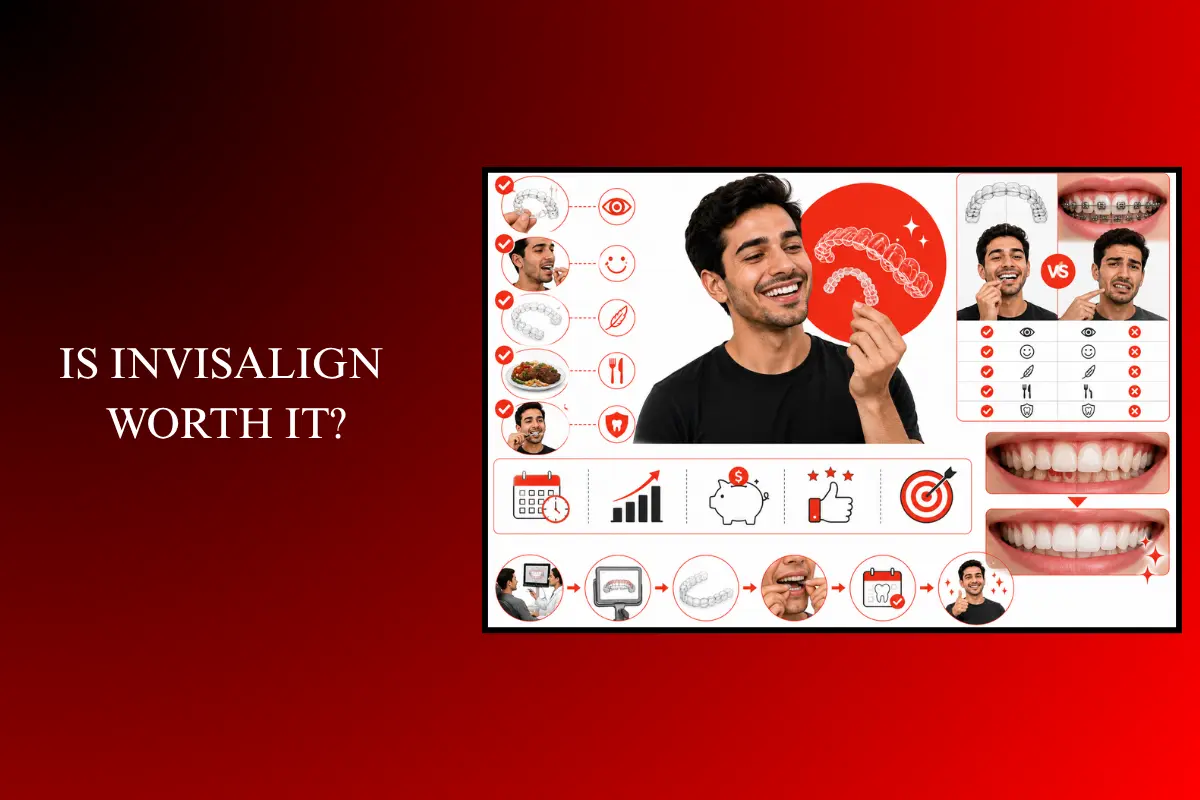
- The Process: Every 1–2 weeks, you move to a new set of trays. Each tray is slightly different, moving your teeth closer to the final “Clin Check” 3D design your dentist created.
- Attachments: Most patients require “buttons” or attachments, small, tooth-colored dots of composite resin that help the trays “grip” and rotate the teeth efficiently.
Is Invisalign Worth It For Adults Who Missed Out on Braces as a Teen?
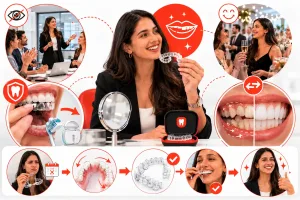
Many of our adult patients feel they “missed the boat” on orthodontics. For this demographic, is Invisalign worth it because of the social and professional implications.
- Discretion: You can lead a board meeting or attend a wedding without anyone noticing your treatment.
- Oral Hygiene: Because you remove the trays to brush and floss, you avoid the gum inflammation and “white spots” often associated with metal braces.
- Correction of “Relapse”: It is the perfect solution for adults whose teeth have shifted because they didn’t wear their retainers after having braces as a teenager.
Invisalign vs. Traditional Braces: The Value Matrix
To truly understand if the investment is justified, you need to compare the two gold-standard treatments across various lifestyle categories.
| Feature | Invisalign Clear Aligners | Traditional Metal Braces |
|---|---|---|
| Aesthetics | Virtually invisible no “metal mouth.” | Highly visible metal brackets/wires. |
| Comfort | Smooth plastic no sharp wires. | Can cause cheek/lip ulceration. |
| Dietary Freedom | Eat anything (trays are removed). | No hard, sticky, or crunchy foods. |
| Treatment Time | 6–18 months (average). | 18–24 months (average). |
| User Discipline | Critical: Must wear for 22 hours/day. | Not required (fixed to teeth). |
| Typical UK Cost | £1,500 – £5,000 | £2,000 – £4,500 |
What are the Genuine Pros And Cons of Invisalign?
Understanding is Invisalign worth it requires a balanced look at the daily reality of the treatment.
The Advantages:
- Removability: You can take them out for photos, eating, and special occasions.
- Predictability: The 3D scanning technology allows you to see your “end result” before you even start.
- Comfort: No “tightening” appointments that leave your mouth sore for day the pressure is more gradual.
The Disadvantages:
- The 22-Hour Rule: If you don’t wear them, they don’t work. Period.
- Constant Cleaning: You must brush your teeth every time you eat or drink anything other than water before putting the trays back in.
- Speech Changes: You may have a slight “lisp” for the first 48–72 hours as your tongue adjusts.
Can Invisalign Fix Severe Overbites, Gaps, or Crowded Teeth?
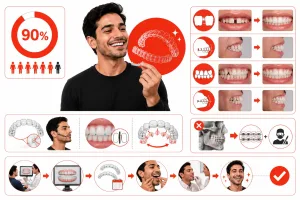
In 2026, Invisalign can treat 90% of orthodontic cases.
- Gaps (Diastemas): Excellent for “pulling” teeth together.
- Overbites/Underbites: Using “wings” or elastic bands, Invisalign can move the jaw position.
- Crowding: By creating tiny amounts of space between teeth (IPR), Invisalign can unravel even severely crooked smiles.
- The “Worst” Cases: For extreme skeletal jaw issues, traditional braces or surgery may still be recommended.
Why Night and Day Emergency Dentist Matters for Aligner Patients
One factor people often forget when asking is Invisalign worth it is: “What happens if things go wrong?”
- Lost/Broken Trays: If you lose your current tray on a Friday night, waiting until Monday for your regular dentist can cause your teeth to shift back, setting your treatment back by weeks.
- Loose Attachments: An attachment falling off can stop a tooth from moving correctly.
- Pain Ulcers: Occasionally, a sharp edge on a tray can cause severe discomfort.
At Night and Day Emergency Dentist, we act as the essential support system for orthodontic patients. We provide 24/7 care for aligner emergencies, ensuring that if you lose a tray or break an attachment, your progress isn’t compromised. We provide the peace of mind that your investment is protected, no matter the time or day.
Book Your Appointment Now!Frequently Asked Questions
Conclusion
So, is Invisalign worth it?
If you value discretion, comfort, and the ability to maintain perfect oral hygiene during treatment, the answer is a resounding yes. However, it is only “worth it” if you are committed to the 22-hour-a-day lifestyle.
Invisalign is an investment in your future health. Straighter teeth are easier to clean, less prone to gum disease, and provide a boost in self-confidence that is hard to quantify in pounds and pence. If you are ready to start but want the security of knowing you have 24/7 support should an emergency arise, the team at Night and Day Emergency Dentist is here to support your journey every step of the way.