Losing teeth can affect more than just your smile—it impacts your ability to eat, speak, and maintain overall oral health. If you’re considering tooth replacement, the two most common options are dentures vs. implants. But which is the best choice for you?
This comprehensive guide will compare these options in detail, helping you make an informed decision based on factors such as cost, comfort, maintenance, and long-term benefits.
Key Takeaways: What You Need to Know?
The Goal: Both dentures and dental implants are designed to replace missing teeth, dramatically improving your chewing capacity, speech clarity, facial structure support, and social confidence.
The Bone Factor: Dental implants require a highly dense, healthy jawbone to successfully host the surgical screw. Traditional dentures can fit comfortably even if you suffer from low bone density.
The Risk Realities: Dental implants are a permanent, lifetime investment, though standard clinical data shows implant failures can occur about 5% to 10% of the time due to healing complications or infection.
Upkeep & Maintenance: Dentures require strict daily removal, cleaning, and overnight soaking, while implants are brushed exactly like natural teeth.
Alternative Options: If you aren’t a direct candidate for either, highly effective alternative treatments include traditional fixed dental bridges, temporary partial dentures (flippers), or hybrid snap-in dentures secured by mini-implants.
What Factors Should I Consider When Choosing Between Dentures vs. Implants?
There are several important factors to evaluate when considering treatments like dentures vs. implants as your preferred option.
| Factor | Dental Implants | Dentures |
|---|---|---|
| Cost | $3,000 – $5,000 per implant (higher upfront, long-term savings) | $1,000 – $3,000 per full set (lower initial cost, may need replacement) |
| Bone Health | Stimulates jawbone, preventing bone loss | No stimulation may lead to bone shrinkage over time |
| Comfort & Stability | Fixed in place, functions like natural teeth | May slip, require adhesives, or cause irritation |
| Maintenance | Brushing, flossing, and dental regular checkups | Must be removed, cleaned daily, and soaked overnight |
| Time Commitment | 3-6 months for healing and integration | Ready within weeks but may require adjustments |
| Durability | Can last a lifetime with proper care | Lasts 5-10 years before needing replacement |
| Natural Feel | Closest to real teeth in look and function | Modern options are comfortable but may feel unnatural |
| Recovery Time | Days to resume daily activities, months for full integration | Weeks to adjust, with possible refitting |
| Procedure Length | Multi-stage process over several months | Completed within a few weeks |
| Best Candidates | Those with good bone density and overall health | Those with significant tooth loss or limited bone structure |
Dental implants restore nearly 80-90% of natural bite strength, allowing you to eat almost anything. In contrast, dentures only restore about 20-25%, making it harder to chew tough foods like steak or raw vegetables.
The Everyday Reality: Look, Feel, and Everyday Functionality
While cost and procedure lengths are crucial factors, understanding what it actually feels like to live with dentures versus dental implants on a daily basis is often the deciding factor for most patients. Both options restore your smile, but they offer vastly different day-to-day experiences.
The Adaptation Period and Muscle Memory:
Dentures: Adapting to traditional dentures is a gradual journey that requires “muscle memory training.” For the first 4 to 8 weeks, your brain, tongue, and cheek muscles must work together to learn how to keep the dental appliance securely in place while chewing and speaking. It is entirely normal to experience minor speech changes, a temporary increase in saliva, or mild sore spots during this adjustment phase.
Dental Implants: Because dental implants are surgically anchored directly into your jawbone, they completely bypass the need for oral muscle adaptation. Once the initial post-surgical healing is complete, implants immediately look, feel, and function exactly like your natural teeth. There is zero impact on your speech patterns or standard chewing mechanics from day one.
Book Your Consultation Now!Understanding Dental Implants
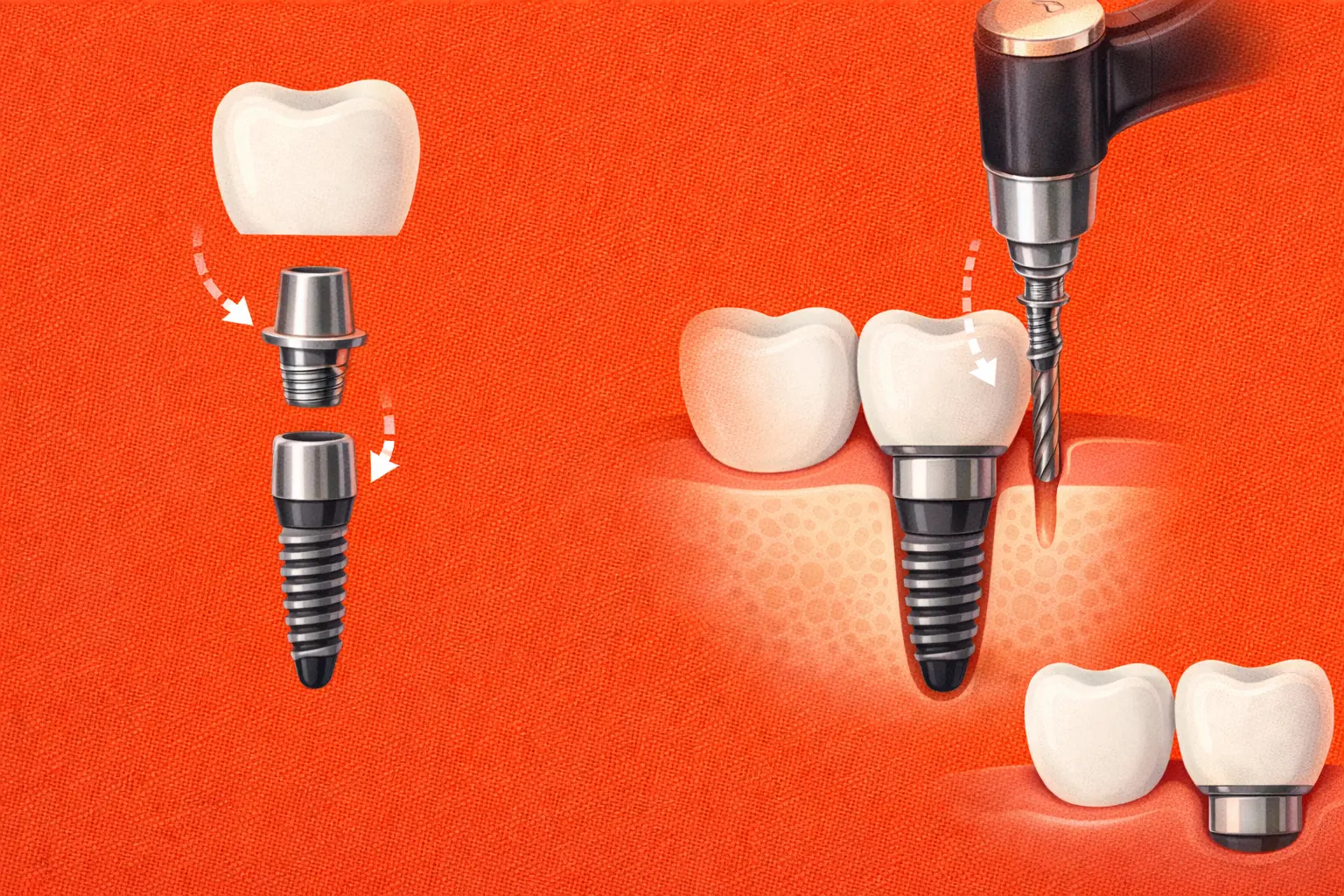
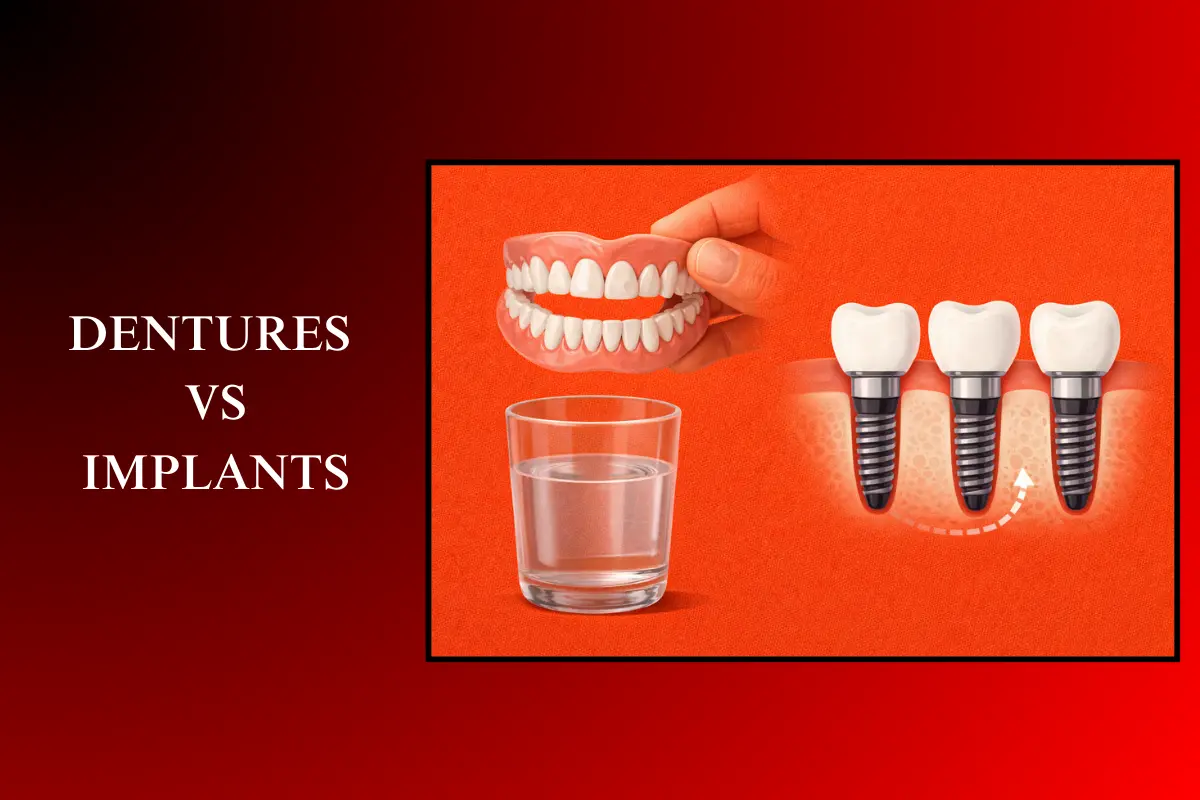
Dental implants are a permanent solution for replacing missing teeth. They consist of a titanium post surgically inserted into the jawbone, an abutment that connects the post to the prosthetic tooth, and a custom-made crown designed to mimic a natural tooth.
Benefits of Dental Implants
- Long-Lasting Solution – Dental implants can last a lifetime with proper care.
- Natural Look and Feel – Implants closely resemble and function like real teeth.
- Preserves Jawbone Health – The titanium post stimulates the jawbone, preventing bone loss and maintaining facial structure.
- No Impact on Surrounding Teeth – Unlike dental bridges, implants don’t require altering adjacent teeth for support.
- Minimal Maintenance – Dental implants require the same care as natural teeth, including brush your teeth, floss your teeth, and regular dental checkups.
Drawbacks of Dental Implants
- Higher Cost – The initial cost of dental implants is higher than dentures, ranging from $3,000 to $5,000 per implant.
- Surgical Procedure Required – Placement requires oral surgery, and healing may take several months.
- Not Suitable for Everyone – Patients with severe bone loss may require additional procedures, such as bone grafting, to support implants.
Fun Fact: Dental implants are made of the same titanium used in space shuttles! That’s why they’re strong, durable, and can last a lifetime.
Understanding Dentures
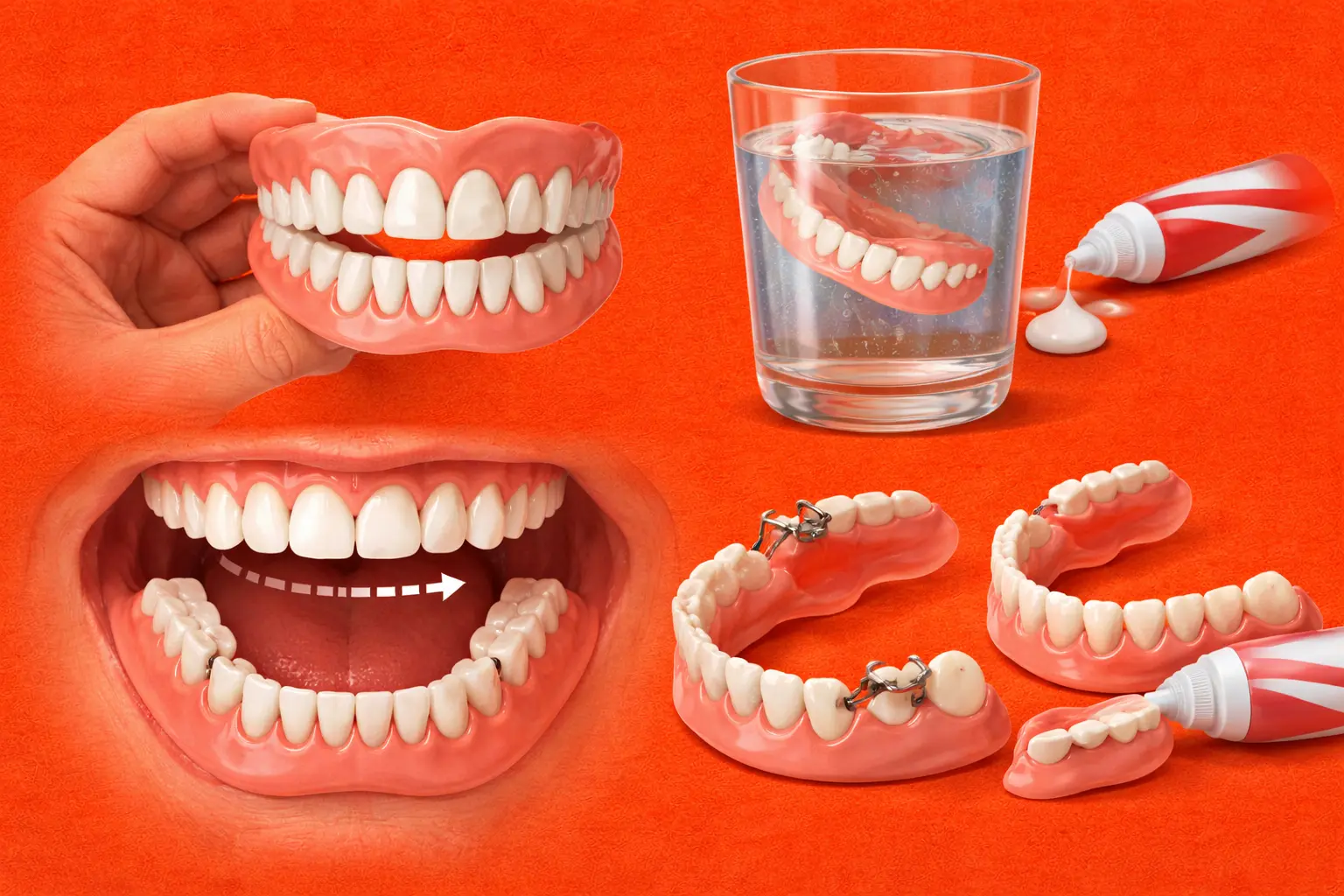
Dentures are removable prosthetic devices designed to replace missing teeth. They can be full dentures (replacing all teeth) or partial dentures (replacing some missing teeth while preserving natural ones).
Benefits of Dentures
- More Affordable – Dentures are a lower-cost alternative to dental implants, with full sets ranging from $1,000 to $3,000.
- Non-Invasive – Unlike implants, dentures do not require surgery.
- Quick Solution – Dentures can be fitted in weeks, whereas implants require a healing period of months.
- Custom Fit – Modern dentures are designed to fit comfortably and securely in the mouth.
Drawbacks of Dentures
- Bone Loss Over Time – Since dentures rest on the gums, they do not stimulate the jawbone, leading to gradual bone loss.
- Frequent Maintenance – Dentures require daily cleaning, soaking, and periodic adjustments.
- Potential for Discomfort – Some wearers experience slipping, sore spots, and difficulty eating certain foods.
- Shorter Lifespan – Dentures typically need to be replaced every 5-10 years.
Did You Know: Despite popular belief, George Washington’s dentures weren’t wooden! They were made of a mix of human and animal teeth, ivory, and metal. Imagine having lead and gold in your mouth.
Do Dental Implants Require Special Care Compared to Dentures?
Yes, but in different ways.
- Dental Implants: They require regular brushing and flossing, just like natural teeth, and routine dental checkups to prevent gum disease around the implant site.
- Dentures: These need to be removed daily for cleaning, soaked overnight to maintain their shape, and require periodic adjustments as the gums change over time.
While implants involve less daily upkeep than dentures, maintaining excellent oral hygiene is crucial for both to prevent infections and ensure longevity.
Cost Comparison: Dentures vs. Implants
Initial Costs:
- Dental Implants: $3,000 – $5,000 per implant.
- Dentures: $1,000 – $3,000 for a full set.
Long-Term Costs:
- Implants require minimal maintenance and rarely need replacement.
- Dentures may need to be replaced every 5-10 years and require adjustments over time.
What is the Recovery Time for Dental Implants vs. Getting Dentures?
- Dental Implants: The process involves multiple stages, including initial surgery, healing (3-6 months for osseointegration), and crown placement. While most people can return to normal activities within a few days, full integration takes longer.
- Dentures: A multi-stage surgical process taking 3–9 months because the titanium post must Osseo integrate(fuse) with the jawbone before the final crown can be attached.
Are there Alternatives like Implant-Supported Dentures?
Yes! Implant-supported dentures combine the benefits of both options:
- Improved Stability: Secured by implants, reducing slippage.
- Bone Health Support: Helps prevent bone loss.
- Cost-Effective: Requires fewer implants than replacing each tooth individually.
Who is the Best Candidate for Each Option?
- Implants: Best for those with good bone density and overall health.
- Dentures: Ideal for those with significant tooth loss and limited bone structure.
Still unsure? Let our experts at Night and Day Emergency Dentist evaluate your case and recommend the best option. So, book your appointment now!
Why Choose Night & Day Emergency Dentist for Your Restorative Journey?
Deciding between dentures and dental implants is a major long-term milestone, but execution and ongoing peace of mind matter just as much as the initial choice. Whether you opt for the advanced longevity of permanent implants or the immediate, non-invasive versatility of premium dentures, Night & Day Emergency Dentist provides an unmatched, comprehensive standard of care across the UK.
Advanced, Stress-Free Restorative Placements: For patients ready to permanently transform their smiles, we offer premium private restorative care for both dentures vs dental implants. We understand that making this transition can feel daunting, which is why our clinics operate as strict judgment-free zones. Our highly skilled clinicians specialize in treating anxious or nervous patients, pacing every stage of your implant surgery or denture fitting to your absolute comfort.
A 24/7 Safety Net for Sudden Complications: Long-term dental work requires an immediate fallback plan. Traditional dental practices operate on strict 9-to-5 schedules, leaving patients stranded if an issue arises over the weekend. As a dedicated, fully registered 24-hour emergency service, our duty never stops—providing instant pain relief and expert restorative repairs every single hour of the day, 365 days a year
For Implant Patients: If an implant crown unexpectedly fractures or feels loose late at night, you don’t have to wait days for a general clinic slot.
For Denture Patients: If a denture plate snaps on a Sunday or during a holiday—instantly affecting your ability to eat and speak—our teams are always on standby.
With state-of-the-art on-site diagnostics, 24/7 online booking, and standard emergency consultation starting at just a while (including all necessary X-rays), we ensure your path to a fully restored smile is completely protected—day or night.
Book Your Consultation Today!FAQs: Dentures vs. Implants
Conclusion: Which Option is Right for You?
The choice between dentures and implants depends on your budget, oral hygiene, and lifestyle. If you seek a permanent, natural-feeling solution and can invest in the procedure, dental implants may be the best option. However, if you prefer a more affordable, non-invasive treatment, dentures may be a suitable choice.
Consult with a dentist to assess your oral health and discuss the best solution for your needs. Whether you choose dentures vs. implants, or implant-supported dentures, the right option will restore your smile and improve your quality of life.