You brush twice a day, you’ve invested in a top-tier electric toothbrush, and you use a mouthwash, yet at every check-up, your dentist still finds plaque between your teeth. The reality is that the toothbrush only cleans three of the five surfaces of your teeth. The remaining 40% lies in the “interproximal” gaps where gum disease and cavities often begin.
The debate of interdental brush vs floss is one of the most common discussions in UK dental surgeries. For years, floss was the only recommendation, but recent clinical evidence suggests that for many, it might not be the most effective choice. In this guide, we break down the science, the technique, and the “3-3-3 rule” to help you choose the right tool for your specific smile.
Why is Cleaning Between Your Teeth Actually Non-negotiable?
Plaque is a sticky film of bacteria that constantly forms on your teeth. If it isn’t physically disrupted, it hardens into tartar (calculus) which can only be removed by a professional.
- The 40% Rule: Brushing leaves nearly half of your tooth surfaces untouched.
- Gum Disease (Gingivitis): Most gum infections start in the gaps where oxygen cannot reach.
- Systemic Health: Chronic gum inflammation is linked to heart disease and diabetes.
Interdental Brush vs Floss: Quick Comparison
| Feature | Interdental Brushes | Traditional Dental Floss |
|---|---|---|
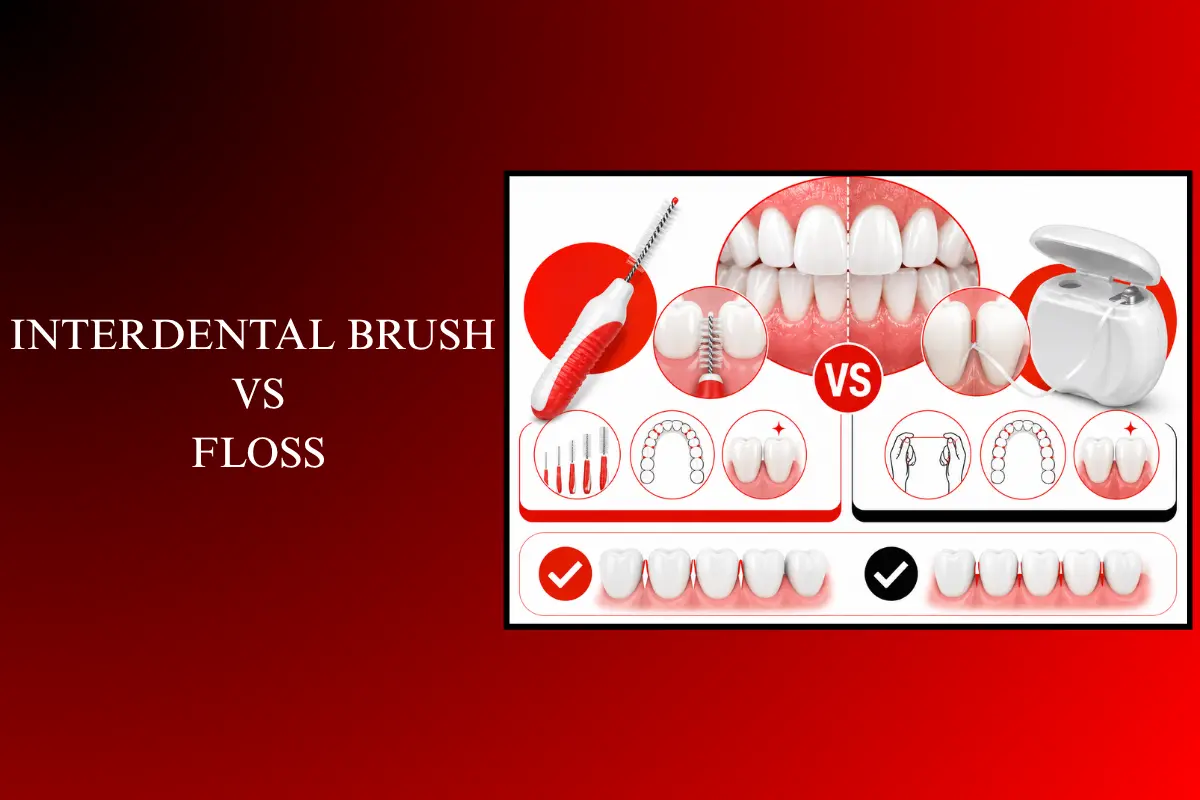
| Plaque Removal | Superior (scrubbing action). | Good (sliding action). |
| Difficulty Level | Low (easy to navigate). | High (requires technique). |
| Best For | Medium/Large gaps, braces, crowns. | Very tight gaps, crowded teeth. |
| Reusability | Reusable for ~7 days. | Single-use only. |
| Gum Stimulation | High (massages the papilla). | Moderate. |
Which Is More Effective For Plaque Removal?
If we look at the clinical data, the interdental brush vs teeth floss comparison often has a clear winner for the average adult.
The Evidence for Interdental Brushes
Studies, including those cited by the British Society of Periodontology, show that interdental brushes are generally more effective at removing plaque than floss.
- Mechanical Scrubbing: The bristles on an interdental brush act like a bottle brush, scrubbing the concave surfaces of the tooth that flat floss simply “glides” over.
- Ease of Use: Most people find brushes easier to handle than wrapping string around their fingers.
The Evidence for Dental Floss
Floss remains essential for “Tight Contacts.” If your teeth are crowded or so close together that a brush cannot pass through without force, floss is your only option. It is a “vertical” cleaner, whereas the brush is a “horizontal” cleaner.What Experts Advice!
Should I Choose an Interdental Brush Instead of Floss?
The answer depends on your “gap profile.” Most people actually need both.
When to Use Interdental Brushes:
- Open Gaps: If you can see daylight between your teeth near the gum line.
- Crowns and Bridges: To clean under and around porcelain restorations.
- Braces (Orthodontics): The only way to scrub under the wire effectively.
- Manual Dexterity Issues: Better for those with arthritis or limited grip.
When to Use Dental Floss:
- Crowded Teeth: Where the space is too narrow for even the smallest ISO size 0 brush.
- High Contacts: Cleaning the point where the teeth actually touch.
- Below the Gum Line: Floss can reach slightly deeper into the “sulcus” (the pocket under the gum).
How to Use Interdental Brushes Without Causing Damage?
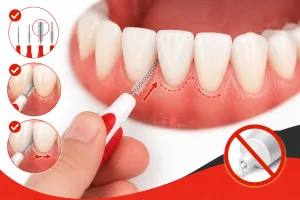
Many patients ask: “How not to use interdental brushes?” Using the wrong technique can lead to gum recession.
- Select the Right Size: You should feel slight resistance, but you should never have to “force” the brush through.
- The Angle: Insert the brush at a slight angle following the contour of the gum.
- The Motion: Move it in and out 2–3 times. There is no need to “saw” back and forth excessively.
- No Toothpaste: You don’t need toothpaste on the brush; the mechanical action and water are enough.
Why Night and Day Emergency Dentist Recommends Interdental Care?
At Night and Day Emergency Dentist, we see the results of “gap neglect” every day. From sudden abscesses caused by trapped food to severe gum infections, many emergencies could be prevented with the right tools.
- Emergency Interventions: If a piece of floss or a broken interdental brush gets stuck, our emergency clinics are available to safely remove it and treat any resulting inflammation.
- Professional Guidance: We don’t just treat the pain; we show you exactly which ISO brush sizes fit your teeth, taking the guesswork out of your shopping.
- Preventive Focus: Our goal is to keep you out of the dental chair. By helping you master the interdental brush vs floss balance, we help you avoid the need for emergency extractions or deep gum treatments.
Frequently Asked Questions
Conclusion
In the battle of interdental brush vs floss, the winner is whichever tool you will actually use every day. For most adults with standard gaps, the interdental brush offers superior plaque removal and ease of use. However, for those with tight, crowded teeth, floss remains an indispensable partner.
Don’t ignore the 40% of your smile that your toothbrush can’t reach. If you aren’t sure which size or tool is right for you, or if you’ve noticed bleeding when you clean between your teeth, contact Night and Day Emergency Dentist. We are available 24/7 to provide expert assessments and ensure your oral health is protected from every angle.