If you’ve ever felt confused, frustrated, or even a little guilty about not flossing as much as you should — you’re not alone. Many people want healthier teeth, fresher breath, and better gum health, but aren’t completely sure they’re flossing correctly.
The truth is: flossing doesn’t need to be difficult, painful or complicated. With the right technique, it takes just a couple of minutes and makes one of the biggest differences to your oral health.
This easy, dentist-approved guide explains how to floss your teeth properly, what tools to use, mistakes to avoid, and how to floss if you have braces, crowns, veneers or implants. Let’s make flossing simple and maybe even enjoyable.
Short Summary
- Brushing alone only cleans part of your teeth; flossing is essential to remove plaque and bacteria from the hidden spaces where gum disease starts.
- The “C-shape” technique; curving the floss around the tooth and sliding it beneath the gumline—is the most effective way to clean.
- Different tools suit different needs: waxed floss is great for tight gaps, while water flossers and super floss are ideal for braces, bridges, and implants.
- Common mistakes like snapping the floss or stopping because of minor bleeding can be avoided with slow, gentle, and consistent movements.
- For the best oral health, floss once daily (ideally at night) to prevent tartar buildup and counteract local lifestyle factors like tea or coffee staining.
Why Is Flossing So Important? (And Why Brushing Alone Isn’t Enough)
Brushing cleans the outer surfaces of your teeth — but it cannot reach between them.
Flossing removes:
- Plaque and bacteria hiding between teeth
- Food debris stuck in tight spaces
- Early-stage buildup that leads to tartar
- Bacteria that cause bad breath
- Plaque below the gumline
Skipping flossing allows plaque to harden into tartar, which only a dentist can remove. Over time, this leads to gum disease, bleeding gums, bone loss, and eventually tooth loss. Flossing is essentially a daily defense for your gums.
Plaque vs Tartar: Why Your Toothbrush Only Solves 60% of the Problem?
Brushing your teeth leaves nearly 40% of your tooth surfaces untouched. In these hidden interdental gaps, bacteria instantly feast on food remnants to form a soft, sticky layer called plaque. If plaque is not mechanically disrupted via daily flossing within 24 to 48 hours, it absorbs minerals from your saliva and calcifies into tartar (calculus). Once tartar forms along your gumline, it cannot be brushed or flossed away—it permanently binds to the enamel and can only be removed via a professional dental scale and polish.
What Is the Correct Way to Floss Your Teeth? (Beginner-Friendly Instructions)
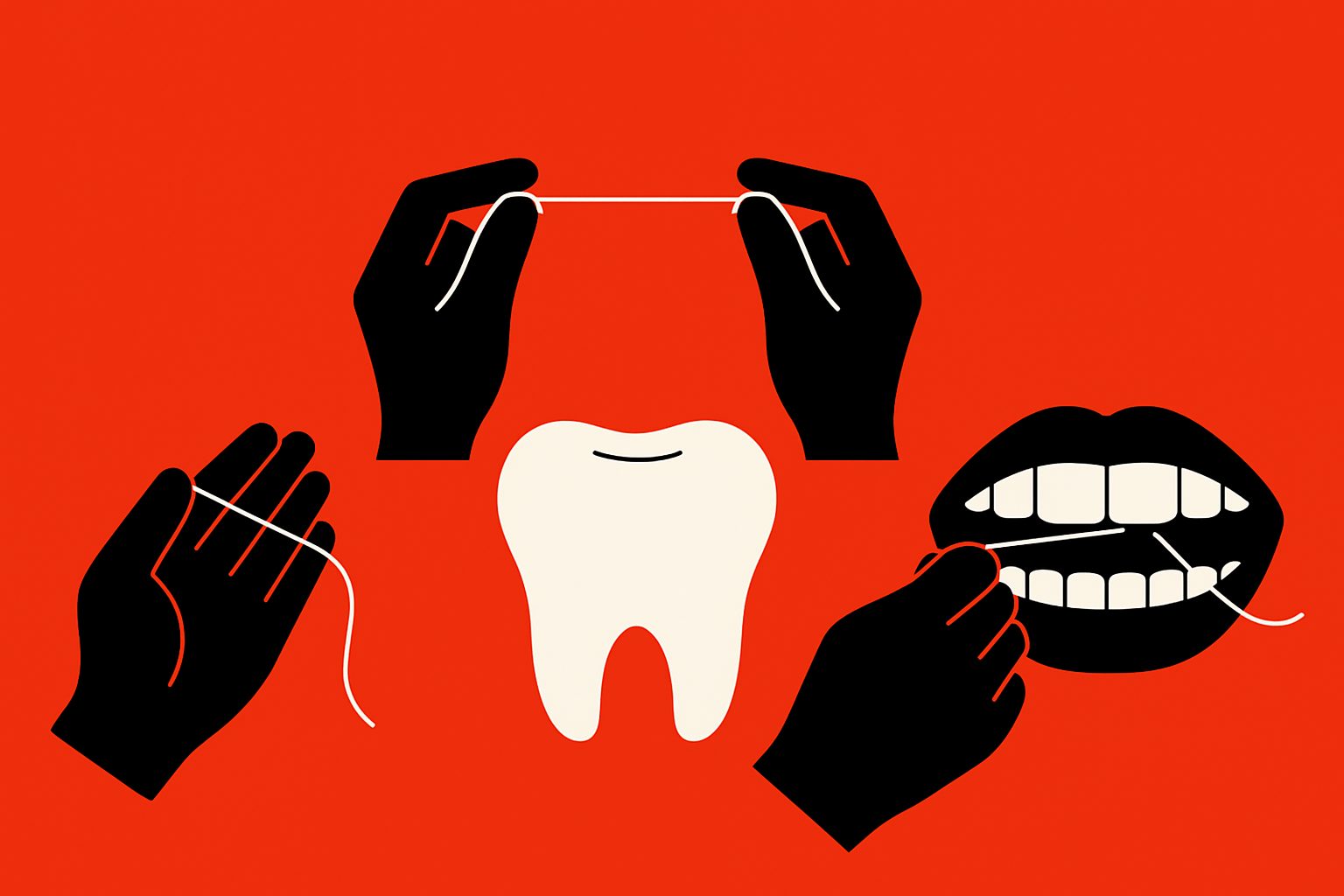
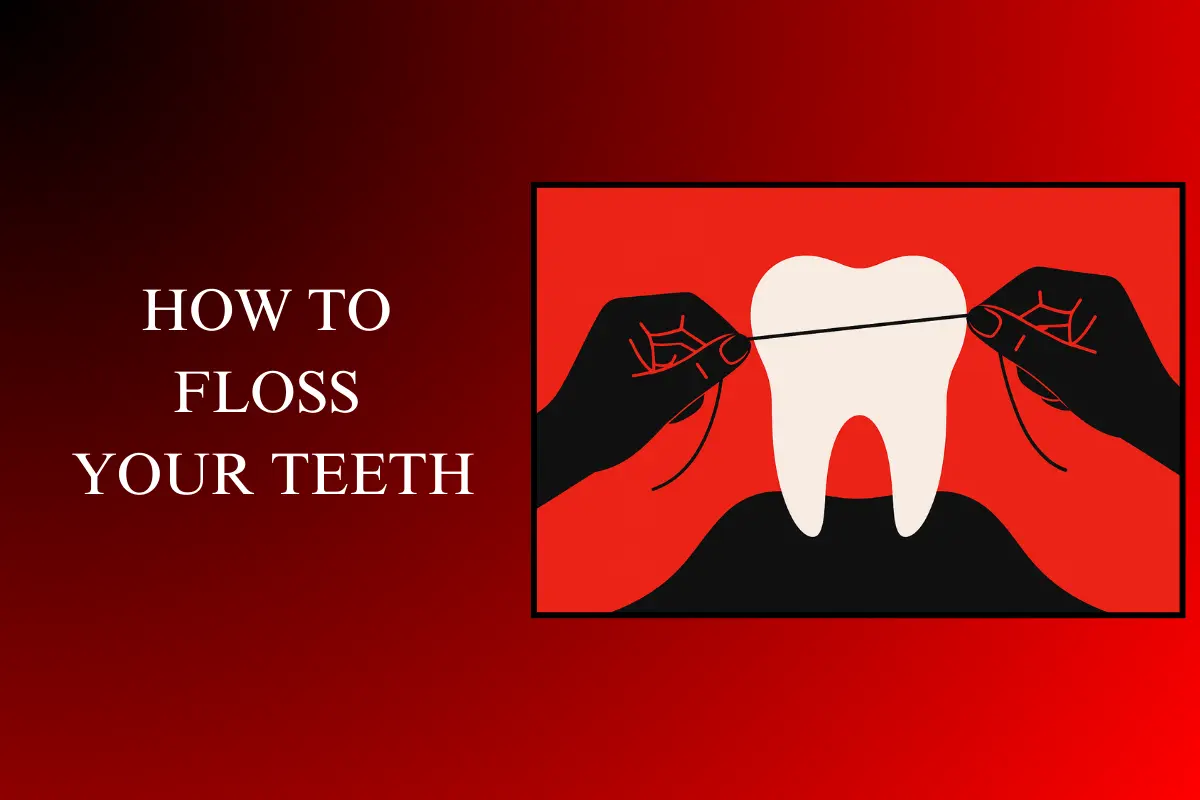
Here’s the dentist-approved technique:
- Cut around 18 inches of floss.
- Wrap most of it around one finger, leaving a small section free.
- Hold the floss tight between thumb and fingers.
- Gently slide the floss between two teeth (never snap it down).
- Curve it into a C-shape around one tooth.
- Move it up and down slowly, reaching just under the gumline.
- Repeat on the other tooth side.
- Use a fresh section of floss for each space.
Dangerous DIY Gaps Cleaners to Avoid
Official dental data shows that when food becomes painfully trapped, many individuals resort to using unsafe household items like fingernails, folded paper, safety pins, sewing needles, or even hair strands. Using non-dental tools can permanently lacerate your delicate gingival tissue, introduce harmful bacteria directly into your bloodstream, or accidentally chip your enamel. If food is severely wedged and string floss fails to dislodge it, contact an emergency provider rather than risking severe gum trauma.
What Are the Different Types of Dental Floss – And Which One Should You Use?
Here’s a simple comparison:
| Floss Type | Best For | Pros | Cons |
|---|---|---|---|
| Waxed floss | Tight teeth | Glides easily | Slightly thicker |
| Unwaxed floss | General use | Very thin | Breaks easily |
| Dental tape | Sensitive gums | Soft, wide | Not for tight gaps |
| Super floss | Braces & bridges | Stiff end helps thread | Requires technique |
| Floss picks | On-the-go cleaning | Convenient | Not as thorough |
| Water flossers | Sensitive gums or braces | Easy & gentle | Doesn’t replace string floss |
| Interdental brushes | Larger gaps | Very effective | Size must fit correctly |
If you’re unsure where to start, waxed floss or interdental brushes are great for most people.
steps for flawless flossing
- Break off about 18 inches of floss, wrapping most of it around one of your middle fingers. Wind the remaining floss around the same finger of the opposite hand. This finger will take up the floss as you move along.

- Hold the floss tightly between your thumbs and forefingers.
- Guide the floss between your teeth using a gentle, rubbing motion. Never snap the floss into the gums.
- When the floss reaches the gum line, curve it into a C shape against one tooth. Gently slide it into the space between the gum and the tooth.
- Hold the floss tightly against the tooth, slightly away from the gums. Gently rub the side of the tooth with an up-and-down motion, following the shape of the tooth. Repeat this method on the rest of your teeth, top and bottom. Don’t forget the back side of your last teeth (at the very back of your mouth.)





How to Floss Your Teeth with Floss Picks or Water Flossers
Floss picks
- Hold the pick firmly
- Guide it gently between teeth
- Move up and down like string floss
- Use a new pick when the string loosens
Great for children and people who struggle with hand dexterity.
Water flossers
- Aim the water stream at the gumline
- Move slowly along each tooth
- Helpful for bridges, implants, braces
- Use warm water if you have sensitivity
How to Floss with Braces (Orthodontic Guide)
Flossing with braces takes more patience but it’s crucial to prevent white spots.
Use:
- Super floss (stiff end for threading)
- Floss threader
- Water flosser
Steps:
- Thread floss under the wire
- Gently clean each side of the tooth
- Avoid pulling upwards — it can unhook brackets
- Repeat for each tooth
How to Floss Around Bridges, Crowns, Veneers, and Dental Implants
Bridges
Use super floss or a threader to get underneath the false tooth.
Crowns & Veneers
Be gentle. Slide floss out sideways to avoid damaging edges.
Implants
Use:
- Soft floss
- Implant-safe brushes
- Water flossers
Never floss aggressively around implants — slow and gentle wins.
The Most Common Flossing Mistakes (And How to Avoid Them)
Avoid:
- Snapping floss between teeth
- Stopping because of early bleeding
- Only flossing front teeth
- Reusing floss
- Rushing the process
Do this instead:
- Use slow, controlled movements
- Curve floss around the tooth
- Go below the gumline
- Use fresh floss each time
How Often Should You Floss Your Teeth for Ideal Oral Health?
- Once a day
- Ideally at night
- It should take 1–2 minutes
- Consistency matters more than perfection
Flossing Tips Specifically for People in Across UK
Local lifestyle factors:
- High tea/coffee intake → staining & plaque
- UK snacking habits → sugar exposure
- Hard water → tartar formation risk
- Colder weather → sensitivity risk for some
Daily flossing helps counteract these common issues.
When Does Flossing Become a Dental Emergency?
While mild bleeding or slight tenderness is completely normal during your first week of establishing a regular flossing routine, certain symptoms require immediate medical evaluation:
-
Heavy, Continuous Bleeding: If your gums bleed heavily and do not stop pressing after 10–15 minutes.
-
Dislodged Dental Work: If sliding floss between your teeth accidentally catches, loosens, or completely snaps off an existing dental crown, dental bridge, or veneer.
-
Trapped Foreign Objects: If a piece of string floss or a plastic floss pick breaks and becomes completely wedged deep inside your gum pocket, causing sudden swelling or throbbing pain.
As a dedicated, fully registered 24-hour emergency service, our duty never stops—providing instant pain relief and expert restorative repairs every single hour of the day, 365 days a year. If a flossing mishap has damaged your dental work or caused an acute infection, our teams are open across the UK for immediate, same-day walk-ins.
Why Trust Night and Day Emergency Dentist for Floss-Related Tooth Pain?
If flossing leads to unexpected:
- Gum pain
- Sudden bleeding
- Swelling
- Broken dental work
- Sensitivity around crowns or veneers
Night and Day Emergency Dentist provides same-day help in serving 24/7 emergency dental care services in Hull, Middleburg, Leicester, Sunderland & all other locations. They can examine the area, stop bleeding, treat infection, repair damaged restorations, and guide you on safe flossing going forward.
Book Your Appointment Now!How to Get Into a Daily Flossing Routine (Even If You Hate Flossing)
- Floss at the same time every day
- Pair it with brushing or skincare
- Keep floss in multiple rooms (bathroom, bedside, living room)
- Use soft floss to avoid discomfort
- Try different tools until you find your favourite
Small habits create big changes.
Frequently Asked Questions
Conclusion
Flossing is one of the simplest, quickest and most effective ways to protect your teeth and gums. Once you learn how to floss your teeth properly, it becomes a natural part of your daily routine — and the health benefits are enormous. Whether you’re doing proper flossing which helps you keep your smile bright, healthy, and confident. And if flossing ever causes unexpected pain or bleeding, Night and Day Emergency Dentist is always here to help.