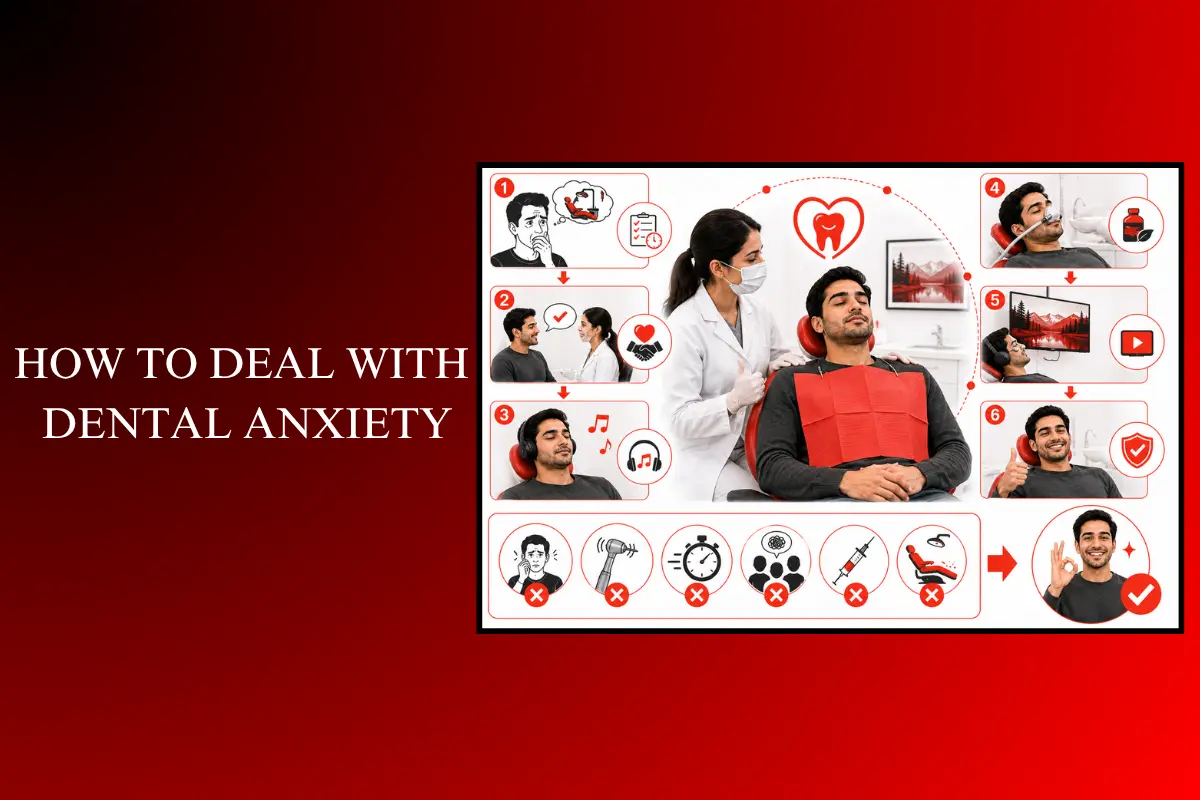
For many people, the thought of a dental chair is enough to trigger a racing heart, sweaty palms, and a sleepless night. If you find yourself cancelling appointments at the last minute or avoiding the dentist for years despite being in pain, you aren’t “difficult”, you are experiencing a very real psychological response.
In the UK, it is estimated that up to 48% of the population experiences some form of dental anxiety, with 12% suffering from “Odontophobia,” an extreme, overwhelming fear. At our dental care, we see patients at their most vulnerable. We understand that the first step isn’t just opening your mouth; it’s finding a way to feel safe. This guide explores the science of dental fear and provides actionable strategies on how to deal with dental anxiety so you can reclaim your oral health without the panic.
Schedule Your Visit Now!Why Do I Get So Much Anxiety Going to the Dentist?
Dental anxiety rarely comes from nowhere. Identifying the “root” of your fear is the first step in managing it. Common triggers include:
- Fear of Pain: Often stemming from a negative childhood experience before modern, painless anesthetics were standard.
- Loss of Control: The feeling of being reclined in a chair with someone working in a highly personal space can feel claustrophobic.
- Fear of the Unknown: Not knowing what the dentist is doing or why they are using specific tools.
- Embarrassment: Many patients are scared to go to the dentist because of bad breath or the condition of their teeth, fearing judgment from the clinician.
- Invasion of Personal Space: Dental work requires a level of physical proximity that can be uncomfortable for those with a history of anxiety.
How Is Dental Anxiety Measured Using The Modified Dental Anxiety Scale (MDAS)?
Clinicians often use the Modified Dental Anxiety Scale (MDAS) to assess a patient’s level of fear. It consists of five questions regarding how you would feel about:
- An upcoming visit tomorrow.
- Sitting in the waiting room.
- Having a tooth drilled.
- Having your teeth scaled and polished.
- Receiving a local anesthetic injection.
Scoring highly on this scale helps your dentist understand that you may need more than just “reassurance”, you may require a structured anxiety management plan.
How To Deal With Dental Anxiety Naturally Using Relaxation Techniques?
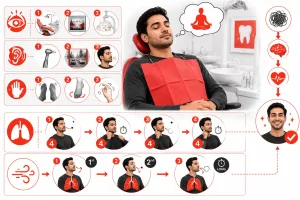
You don’t always need medication to manage your “fight or flight” response. You can use these physiological tools in the waiting room or even in the chair.
The 3-3-3 Rule for Anxiety
This is a grounding technique used to bring your mind back to the present moment:
- See: Name three things you see in the room (the chair, a poster, the light).
- Hear: Identify three sounds you hear (the hum of the drill, traffic outside, your own breathing).
- Move: Move three parts of your body (wiggle your toes, rotate your ankles, tap your fingers).
Deep Breathing & Physiological Sighs
When you are anxious, you take shallow breaths, which signals to the brain that you are in danger.
- The Box Breath: Inhale for 4 seconds, hold for 4, exhale for 4, hold for 4.
- The Physiological Sigh: Take a deep breath in, followed by a second short “sip” of air at the top, then a long, slow exhale. This is the fastest biological way to lower your heart rate.
Can I Listen to Headphones or Use Distractions at the Dentist?
Absolutely. Distraction is one of the most effective ways on how to deal with dental anxiety during a procedure.
- Noise-Cancelling Headphones: The “sound” of the dentist is often the biggest trigger. Listening to a podcast, an audiobook, or a “White Noise” playlist can mask the sounds of the surgery.
- Guided Imagery: Close your eyes and imagine a “safe place” in vivid detail. What does the air smell like? What is the temperature? What is the blood pressure?
- Fidget Toys: Squeezing a stress ball or playing with a fidget spinner gives your nervous energy a physical outlet.
What Clinical Sedation Options Are Available For Anxious Patients?
If natural techniques aren’t enough, modern dentistry offers pharmaceutical support to help you feel indifferent to the treatment.
Sedation Comparison Table
| Method | What is it? | How it feels | Best for |
|---|---|---|---|
| Inhalation (Gas & Air) | A mixture of Nitrous Oxide and Oxygen. | “Happy gas.” You feel light, giggly, and relaxed. | Mild to moderate anxiety; wears off quickly. |
| Oral Sedation | A prescription tablet (anxiolytic) taken before the visit. | Drowsy and relaxed. You are conscious but “don’t care.” | Those who are nervous about the journey to the clinic. |
| Intravenous (IV) Sedation | Sedative drugs administered via a small needle in the arm. | “Twilight sleep.” You are awake but won’t remember the visit. | Severe dental phobia or long, complex procedures. |
| General Anesthetic | Performed in a hospital setting. | You are completely unconscious. | Very rare; usually for complex oral surgery or special needs. |
How Can I Communicate My Fears to My Dentist Effectively?
The “Patient-Dentist” relationship is a partnership. A good dentist wants to help you feel comfortable, but they need you to set the boundaries.
- The Stop Signal: Agree on a hand signal (usually raising your left hand) that means “Stop everything immediately.” This gives you back a sense of total control.
- Be Honest About Your Past: If a specific event caused your fear, tell your dentist. They can avoid certain triggers or explain things differently to accommodate you.
- The “Tell-Show-Do” Method: Ask the dentist to tell you what they are doing, show you the tool they will use (on your finger first, for example), and then do the procedure.
Why Choose Night and Day Emergency Dentist for Anxious Patients?
Dental anxiety often leads to “avoidance,” which in turn leads to dental emergencies. We understand the cycle of guilt and pain that anxious patients experience.
At Night and Day Emergency Dentist, we specialize in:
- Judgment-Free Care: We don’t care how long it has been since your last visit or what your teeth look like. We are just glad you are here.
- High-Stress Management: As an emergency clinic, our staff is specifically trained to handle patients in high-distress situations. We move at your pace.
- Emergency Interventions: If you have been avoiding the dentist and now have a severe abscess or toothache, we provide the sedation and support needed to resolve the crisis immediately.
- Transparent Communication: We explain every step of your emergency treatment, ensuring there are no “surprises” that could trigger further anxiety.
Frequently Asked Questions
Conclusion
Learning how to deal with dental anxiety is not a linear process. Some days will be easier than others. The key is to find a dental team that respects your boundaries and provides the clinical tools whether it’s gas and air or just a sympathetic ear to help you get the care you need.
Don’t let fear dictate your health. If you are in pain and the thought of an appointment is overwhelming, contact Night and Day Emergency Dentist. We provide the compassionate, expert care needed to help even the most anxious patients find relief, day or night.