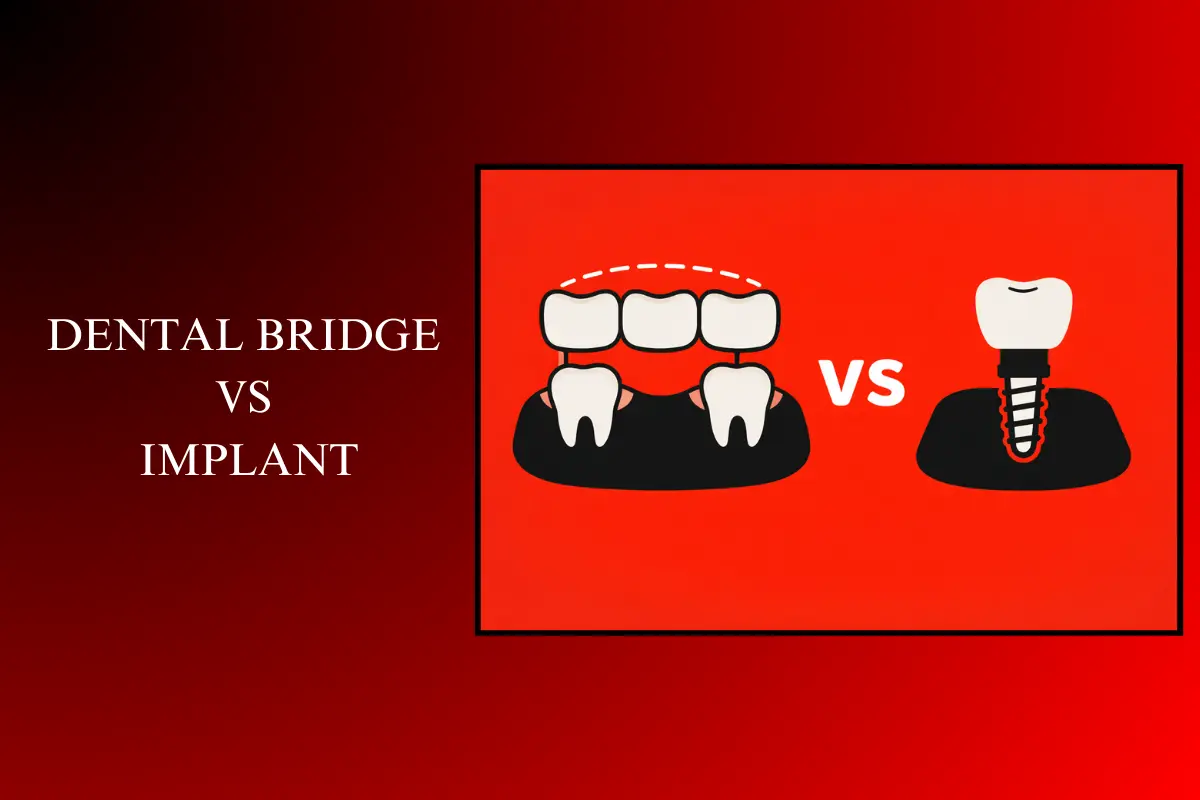
Losing a tooth can be unsettling. Whether it’s due to decay, an accident, or gum disease, a missing tooth can affect how you eat, speak, and feel about your smile. Leaving it untreated is a risk to your long-term dental care. Two of the most common solutions for replacing missing teeth are dental bridges and dental implants. While both restore function and appearance, they work in very different ways.
At Night & Day Emergency Dentist, we help patients explore tooth replacement options with clear, honest advice and personalized care.
Short Summary
- Dental bridges and implants are the two primary solutions for replacing missing teeth, each offering unique benefits for your smile and bite.
- A dental bridge is a non-surgical, faster option (2–3 weeks) that uses neighboring teeth for support to fill the gap.
- Dental implants replace the tooth root with a titanium post, providing a permanent, independent solution that preserves jawbone health.
- While bridges have a lower initial cost, implants are more durable in the long term, often lasting 20 years or more with proper care.
- Choosing the right treatment depends on your oral health, budget, and whether you prefer a quick restoration or a long-lasting surgical solution.
What is a Dental Bridge?
A dental bridge replaces one or more missing teeth by filling the gap with an artificial tooth (or teeth). The bridge is supported by the natural teeth on either side, which are shaped and covered with crowns to hold the bridge securely in place As a core part of restorative dental care, bridges are an excellent way to prevent your remaining teeth from shifting out of alignment. Once fitted, a dental bridge is fixed — meaning it stays in your mouth and functions like natural teeth when eating and speaking.
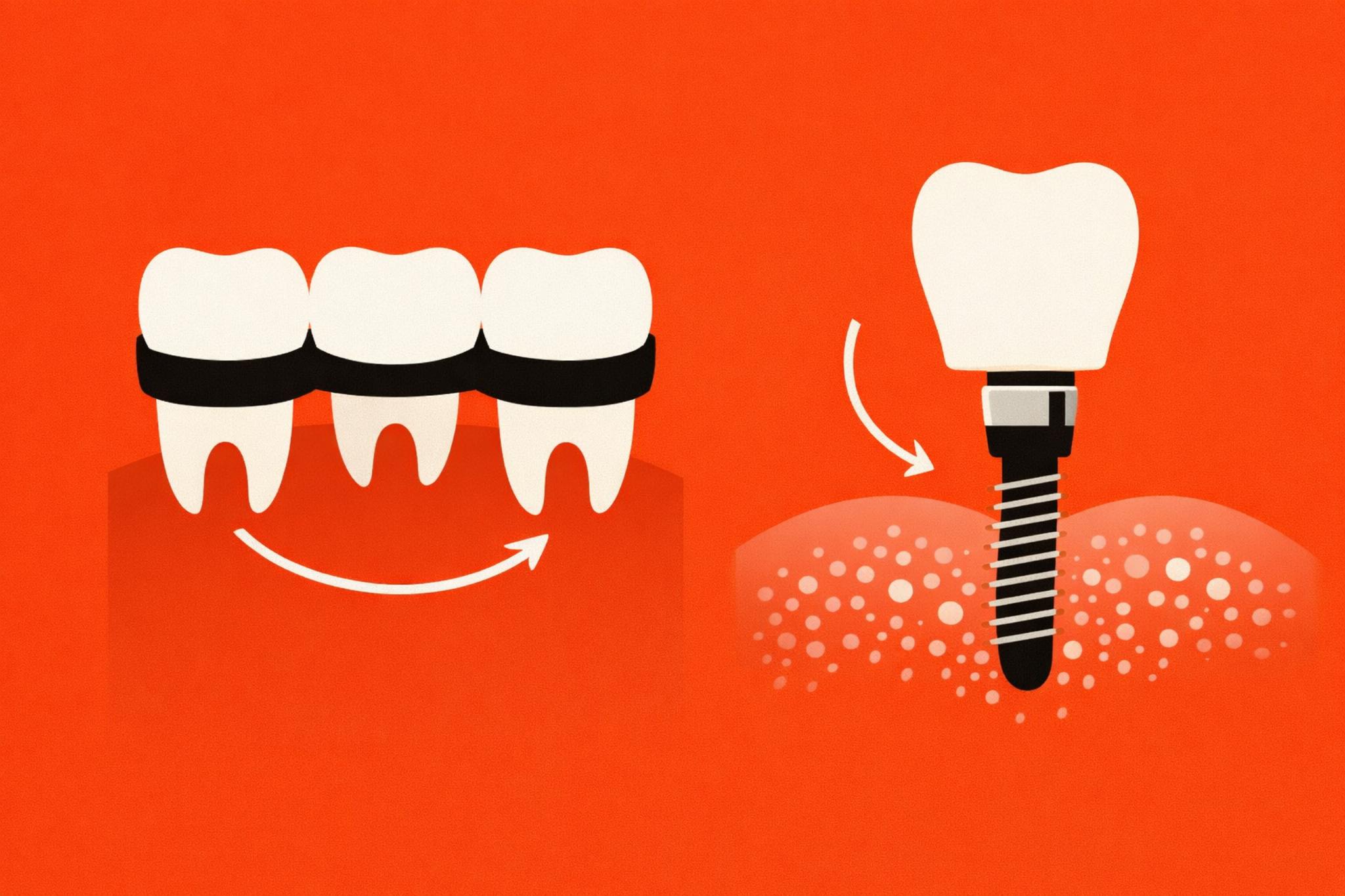
Dental Bridges a traditional bridge spans the gap of a missing tooth by placing crowns on the healthy teeth on either side to anchor the artificial tooth in the middle.
- Lower Upfront Cost: More affordable in the short term and often partially covered by insurance.
- Faster Treatment: Completed in just 2 to 3 visits without surgery.
- Ideal If Adjacent Teeth Need Crowns: If the neighboring teeth already have large fillings or crowns, a bridge fixes multiple issues at once.
- Alters Healthy Teeth: Requires filling down healthy adjacent teeth to serve as anchors, which can weaken them over time.
- Shorter Lifespan: Typically lasts 7 to 15 years before needing replacement or repair.
- Bone Loss Risk: Since the tooth root is not replaced, the jawbone underneath the bridge can deteriorate.
- Harder to Clean: You cannot floss normally under a bridge; you must use special flossing tools to prevent decay on the supporting teeth.
What is a Dental Implant?
A dental implant replaces the missing tooth from the root upwards. A small titanium post is placed into the jawbone, acting as an artificial tooth root. Over time, this post bonds with the bone, creating a strong and stable foundation for a custom-made crown. Because implants replace the root as well as the tooth, they help maintain jawbone strength and provide a very natural look and feel.
Pros:
- Bone Preservation: Because they act as artificial roots, implants stimulate the jawbone and prevent bone shrinkage.
- No Adjacent Tooth Damage: Healthy neighboring teeth do not need to be filed down for support.
- Easy Maintenance: They feel, function, and are cleaned just like natural teeth
- Permanent & Long-Lasting: Can last a lifetime (20+ years) if properly cared for.
- Higher Upfront Cost: Generally more expensive initially.
- Surgery Required: Requires minor oral surgery and a healing period (often several months) for the bone to integrate with the implant.
- Not for Everyone: Patients with insufficient jawbone density may require additional procedures like bone grafting.
Dental Bridge vs Implant: Key Differences at a Glance
| Feature | Dental Bridge | Dental Implant |
|---|---|---|
| Surgery required | No | Yes |
| Treatment time | 2–3 weeks | 3–6 months or more |
| Support | Neighboring teeth | Jawbone |
| Impact on nearby teeth | Requires reshaping | No impact |
| Bone preservation | No | Yes |
| Lifespan | 10–15 years | 20+ years |
| Cleaning | Needs special care | Like natural teeth |
| Cost (Average) | £500 – £1,500 | £2,000 – £3,500 |
This comparison highlights why the “best” option often depends on your oral health, lifestyle, and long-term goals.
Treatment Process and Timeframe
Dental Bridge Treatment: Dental bridge treatment usually involves preparing the supporting teeth, taking impressions, and fitting the final bridge. Most bridges are completed within two to three weeks, making this a relatively quick option.
Dental Implant Treatment: Implant treatment takes longer. After the implant is placed, the jawbone needs time to heal and bond with it. This healing phase typically lasts three to six months, after which the final crown is fitted. While implants take more time, many patients feel the long-term benefits are worth the wait.
4 Types of treatment Dental Bridges vs. Dental Implants
A dental bridge, as the name implies, bridges the gap where a tooth once was. It involves replacing a missing tooth with a false tooth which is bonded to your natural teeth on either side of the gap. The diagram shows how a bridge is fitted.
An implant, on the other hand, consists of a titanium screw that’s fixed into your jawbone and topped with a replacement tooth, also known as a crown. It’s also possible to have an implant-supported bridge, which involves placing a bridge on top of implants to replace multiple missing teeth in a row.
- Visual Appearance and Everyday Comfort (Visibility): Because a bridge sits on top of the gums rather than being embedded beneath them, the underlying support framework may occasionally be slightly visible behind or between the replacement teeth. While highly aesthetic, it typically takes a few weeks of “muscle memory” adjustment to get used to the physical feeling of a bridge framework in your mouth. An implant emerges directly out of the gumline exactly like a natural tooth crown. There are no hidden support bars or connecting wings, making them completely indistinguishable from your surrounding teeth.
- Impact on Your Existing Teeth: To anchor a traditional bridge, the healthy, natural teeth on either side of the gap must be permanently filed or cut down to host the supporting crowns. Furthermore, a bridge spreads all chewing pressure across these adjacent teeth, which can increase their structural load over time. Implants are entirely independent systems that do not cause any damage to your existing teeth. Because the titanium post is embedded directly into your jawbone, it can withstand 100% of your natural bite force without relying on or putting pressure on surrounding teeth.
- Long-Term Jawbone Health and Facial Structure: While a bridge effectively secures adjacent teeth to stop them from shifting or leaning into the empty space, it lacks a physical root substitute. Because there is no screw placed into the socket to stimulate the bone, a dental bridge cannot prevent jawbone loss over time. An implant acts exactly like a real tooth root. By fusing directly with your jawbone (osseointegration), it continuously stimulates the bone as you chew. This keeps your jaw strong as you age, actively preventing the localized bone degradation that causes facial sagging or changes in your face shape.
- Structural Wear and Lifespan Over Time: Due to the continuous chewing pressure placed on the modified supporting teeth, a dental bridge naturally weakens over time. While exceptional oral hygiene ensures they last for many years, a bridge is not a lifetime fix and will eventually require professional restoration or replacement. If properly maintained with standard brushing, flossing, and routine dental cleanings, the titanium post of a dental implant is designed to last a lifetime, making it the most durable long-term investment in restorative dentistry.
Cost of Dental Bridges and Implants
Cost is an important factor for many patients.
- Dental bridges: Typically range from £500 to £1,500, depending on the materials used and the number of teeth being replaced.
- Dental implants in: Usually range from £2,000 to £3,500 per tooth, including the implant, abutment, and crown.
Your dentist will discuss all costs with you book your appointment now for instant consultation so you can make a confident, informed decision.
Eating and Everyday Life
Eating With a Dental Bridge
Yes, you can eat normally with a dental bridge once you’ve adjusted. It’s best to avoid very hard or sticky foods initially and maintain good oral hygiene around the bridge.
Eating With a Dental Implant
Dental implants function like natural teeth. After healing, you can eat comfortably without worrying about movement or slipping.
Caring for Your Bridge or Implant
Good oral hygiene is essential for both options.
- Dental bridges require careful cleaning around and underneath the bridge using special floss or brushes.
- Dental implants are cleaned like natural teeth with brushing, flossing, and regular dental check-ups.
Your dentist will guide you on the best care routine for your treatment.
What to choose a Dental Implant vs Dental Bridge?
Dental Implant:
-
You want a lifetime solution: Implants are designed to last 20+ years to a lifetime, whereas bridges usually need replacing every 5 to 15 years.
-
You want to protect healthy teeth: Implants stand alone in the jawbone and do not require your neighboring healthy teeth to be filed down.
-
You want to prevent bone loss: Implants mimic real tooth roots, stimulating the jawbone to stop it from shrinking and preventing facial sagging over time.
-
You have the time and budget: You can afford a higher upfront cost and don’t mind a multi-stage process that takes 3 to 9 months to heal.
Dental Bridge:
-
You want a fast fix: A bridge can be completed in just 2 to 3 appointments over a few weeks, with no surgery required.
-
You have low bone density: If your jawbone is too thin for an implant and you want to avoid a costly, invasive bone graft procedure.
-
The neighboring teeth already need crowns: If the teeth on either side of the gap are already heavily decayed or broken, a bridge serves a dual purpose by restoring them at the same time.
-
You need a lower upfront cost: Bridges are significantly cheaper than implants initially, making them more budget-friendly.
While choosing between a permanent implant and a traditional bridge is a long-term decision, any sudden damage to these restorations—such as a snapped bridge or a loose implant crown—constitutes a serious dental emergency that requires immediate professional repair to prevent infection.
Why Trust Night & Day Emergency Dentist for Tooth Replacement?
Replacing a missing tooth is a big decision, and having the right dental team makes all the difference. Instant Booking: 24/7 Emergency Dentists | Available in Manchester, Edinburgh, Nottingham, Leicester, Acton & Other cities.
If you’re considering a dental bridge or implant and you:
- Want clear, honest advice
- Need help choosing the right option
- Are concerned about comfort or longevity
- Want treatment tailored to your needs
Night & Day Emergency Dentist can:
- Assess your oral health and smile goals
- Explain your options in simple, clear terms
- Create a personalized treatment plan
- Support you throughout your treatment
We also provide a wide range of dental Emergencies service, including dental implants, emergency dental care, teeth whitening, and general dentistry.
Book Your Appointment Now!Frequently Asked Questions (FAQs)
Final Thoughts
Both dental bridges and dental implants are effective ways to replace missing teeth. A bridge may suit those looking for a quicker solution, while implants offer long-term stability and help protect jawbone health. At Night & Day Emergency Dentist, we take the time to understand your needs and guide you toward the option that’s right for your smile.