That sharp, sudden “zap” when you take a sip of cold water or a spoonful of hot soup is more than just an annoyance; it’s your teeth’s way of telling you their protective barrier has been breached. Sensitive teeth, known clinically as dentin hypersensitivity, affect millions of people across the UK.
While many people view it as a minor inconvenience, persistent sensitivity can be the first warning sign of receding gums or thinning enamel. At Night and Day Emergency Dentist, we see patients who have tolerated this discomfort for years, only to realize that a simple change in routine or a quick professional treatment could have solved the problem. This guide explores why your teeth are reacting and the most effective ways to silence the pain.
What Causes Sensitive Teeth (Dentin Hypersensitivity)?
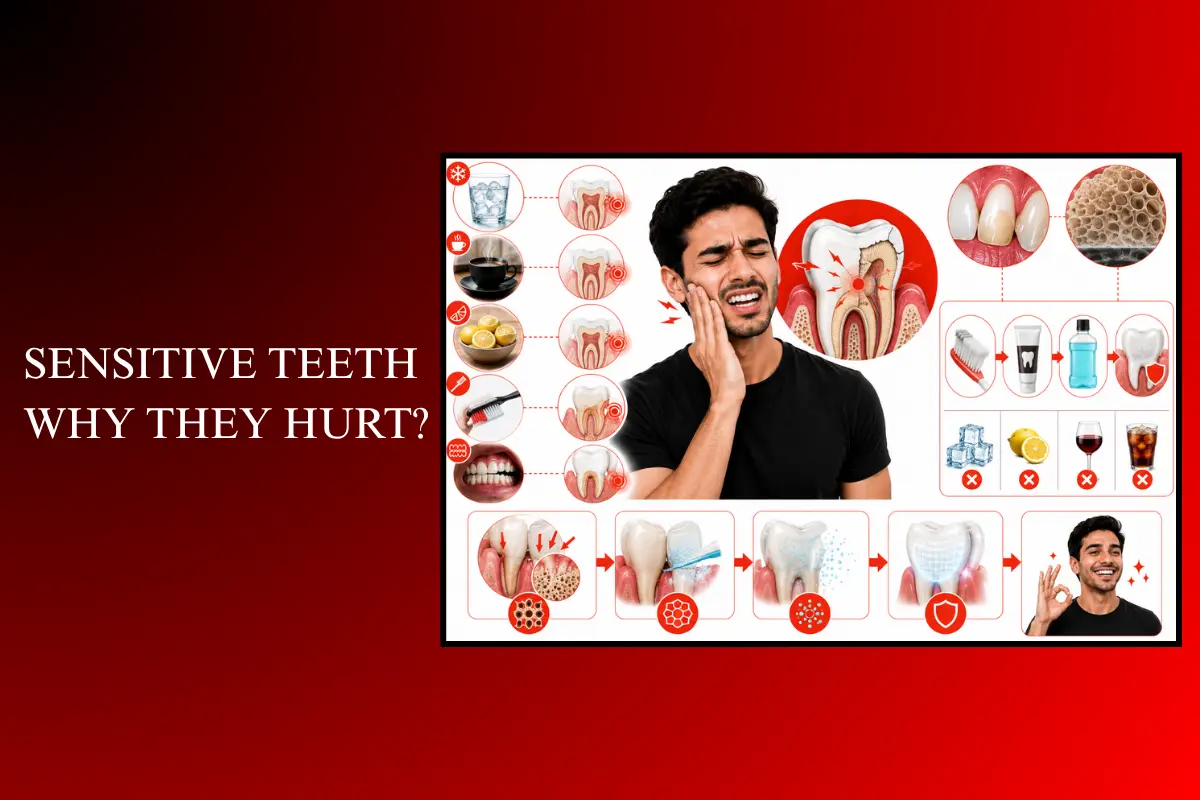
To understand sensitive teeth, you have to look under the surface. Your teeth are covered by enamel, the hardest substance in the human body. Underneath that is dentin, which contains thousands of microscopic channels (tubules) leading directly to the nerve.
When your enamel thins or your gums recede, these tubules are exposed. When they come into contact with hot, cold, or acidic stimuli, the fluid inside the tubules moves, triggering the nerve and causing that distinct “zing” of pain.
Primary Causes Include:
- Over-Brushing: Brushing too hard or using a hard-bristled brush can wear down enamel over time.
- Acid Erosion: Frequent consumption of fizzy drinks, citrus fruits, and wine “softens” the enamel.
- Tooth Grinding (Bruxism): Clenching your teeth, especially under stress, can lead to enamel wear and “abfraction” lesions at the gum line.
- Gum Disease: Gingivitis or periodontitis causes the gums to pull away from the tooth, exposing the vulnerable root.
Can Stress or Vitamin Deficiencies Cause Tooth Sensitivity?
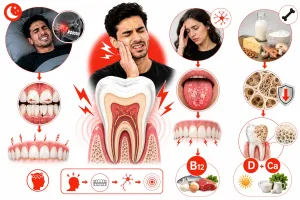
Many patients are surprised to learn that their mouth is a mirror for their body’s overall health.
- The Stress Connection: Stress often leads to nocturnal bruxism (grinding). This mechanical wear is a leading cause of generalized sensitivity across all teeth.
- Vitamin B12 Deficiency: One of the early warning signs of a B12 deficiency is a sore, burning tongue and generalized tooth sensitivity. B12 is essential for nerve health; without it, the nerves in your teeth can become overactive and hyper-sensitive.
- Vitamin D and Calcium: If you are lacking in these, your body cannot effectively remineralise your enamel, leading to “soft” teeth that are more prone to sensitivity.
Why is Only One Tooth Sensitive to Cold or Pressure?
If the “zing” is localized to a single spot, it is rarely just “sensitivity.” It usually indicates a localized structural issue:
- A Dislodged Filling: If a filling has a gap (micro-leakage), bacteria and temperature can get underneath.
- A Cracked Tooth: Pain when you release your bite is a classic sign of a cracked tooth.
- Localized Recession: Perhaps you brush one area of your mouth more aggressively than others.
- Abscess or Infection: If the sensitivity is accompanied by a dull ache or swelling, the nerve may be dying.
Treatment Matrix: Home Remedies vs. Professional Care
To decide on the best path forward, compare the efficacy of different treatments:
| Treatment Type | Method | Best For | Expected Result |
|---|---|---|---|
| Home: Desensitizing Toothpaste | Potassium Nitrate or Stannous Fluoride. | General, mild sensitivity. | Blocks tubules over 2-4 weeks of use. |
| Home: Soft-Bristled Brush | Manual or Electric (Pressure Sensor). | Preventing further enamel wear. | Stops the problem from getting worse. |
| Professional: Fluoride Varnish | High-concentration fluoride applied in-chair. | Moderate sensitivity / Exposed roots. | Immediate, long-lasting relief. |
| Professional: Dental Bonding | Composite resin applied over the root. | Severe gum recession. | Acts as a “shield” for the exposed area. |
| Professional: Mouth Guard | Custom-made night guard. | Grinding and stress-related pain. | Prevents mechanical enamel loss. |
How to Stop Sensitivity in Teeth Naturally?
If you want to reduce discomfort without heavy chemicals, consider these lifestyle adjustments:
- Change Your Brushing Technique: Focus on circular motions rather than a “sawing” back-and-forth motion.
- Saltwater Rinse: A lukewarm saltwater rinse helps balance the pH of the mouth and reduces inflammation in the gums.
- Avoid “Trigger” Foods: Temporarily cut out highly acidic foods like tomatoes, pickles, and fizzy water to allow your enamel to remineralizer.
- Coconut Oil Pulling: While not a clinical cure, some find that oil pulling reduces the bacterial load that can irritate sensitive gums.
What Foods And Drinks Worsen Sensitive Teeth?
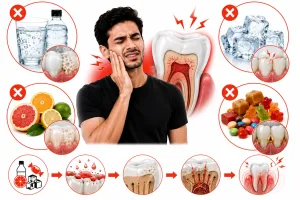
If you are currently in a “flare-up” of sensitivity, avoid the following:
- Fizzy Water: Even without sugar, the carbonation makes the water acidic.
- Ice Cubes: Not just the cold, but the habit of chewing ice can cause micro-fractures.
- Citrus Fruits: Lemons, limes, and grapefruits are enamel’s worst enemy.
- Sticky Sweets: These pull at the teeth and trap sugar in the gaps, leading to rapid decay near the nerve.
Why Choose Night and Day Emergency Dentist for Sensitivity?
While “sensitive teeth” might not sound like an emergency, a sudden, sharp pain that prevents you from eating or drinking is a crisis. At Night and Day Emergency Dentist, we priorities getting to the “why” of your pain:
- Urgent Assessments: We differentiate between standard sensitivity and a cracked tooth or tooth abscess that needs immediate intervention.
- Immediate Desensitization: We can apply high-grade professional sealants that provide relief much faster than supermarket toothpastes.
- Nervous Patient Care: We understand that dental pain can be anxiety-inducing. We offer a calm, judgment-free environment to resolve your sensitivity issues.
- Transparent Advice: If your sensitivity is linked to your diet or a vitamin deficiency, we provide the holistic advice you need to fix the problem permanently, not just mask the symptoms.
Frequently Asked Questions
Conclusion
Sensitive teeth are a signal, not a life sentence. In most cases, the solution is as simple as switching your toothpaste or wearing a night guard. However, when sensitivity is sudden, localized, or severe, it requires a professional eye to ensure you aren’t ignoring a brewing emergency.
By protecting your enamel today, you avoid the extractions and root canals of tomorrow. If you are struggling with a “zing” that won’t go away, contact Night and Day Emergency Dentist. We are available 24/7 to help you stop the pain and protect your natural smile.