It is a deeply unsettling moment in the dental care chair: you maintain an immaculate brushing and flossing routine, cut down on sweets, and yet your clinician looks into your mouth and asks if you suffer from chronic heartburn or indigestion. For millions of people across the UK, the first physical indication of gastric trouble doesn’t show up as an upset stomach, it manifests silently as permanent damage to their smile.
Gastro-oesophageal reflux disease (GORD), often referred to simply as acid reflux, forces powerful digestive acids backward up the oesophagus and directly into the oral hygiene. While your stomach lining is biologically designed to safely withstand these corrosive liquids, your teeth are completely defenseless against them.
At Night and Day Emergency Dentist, we routinely diagnose the structural signs of acid reflux on teeth before patients are even aware they have an underlying medical condition. This guide will break down the structural changes to look for, the chemical realities of erosion, and how to stop gastric acid from ruining your smile.
What are the Unmistakable Signs of Acid Reflux on Teeth?
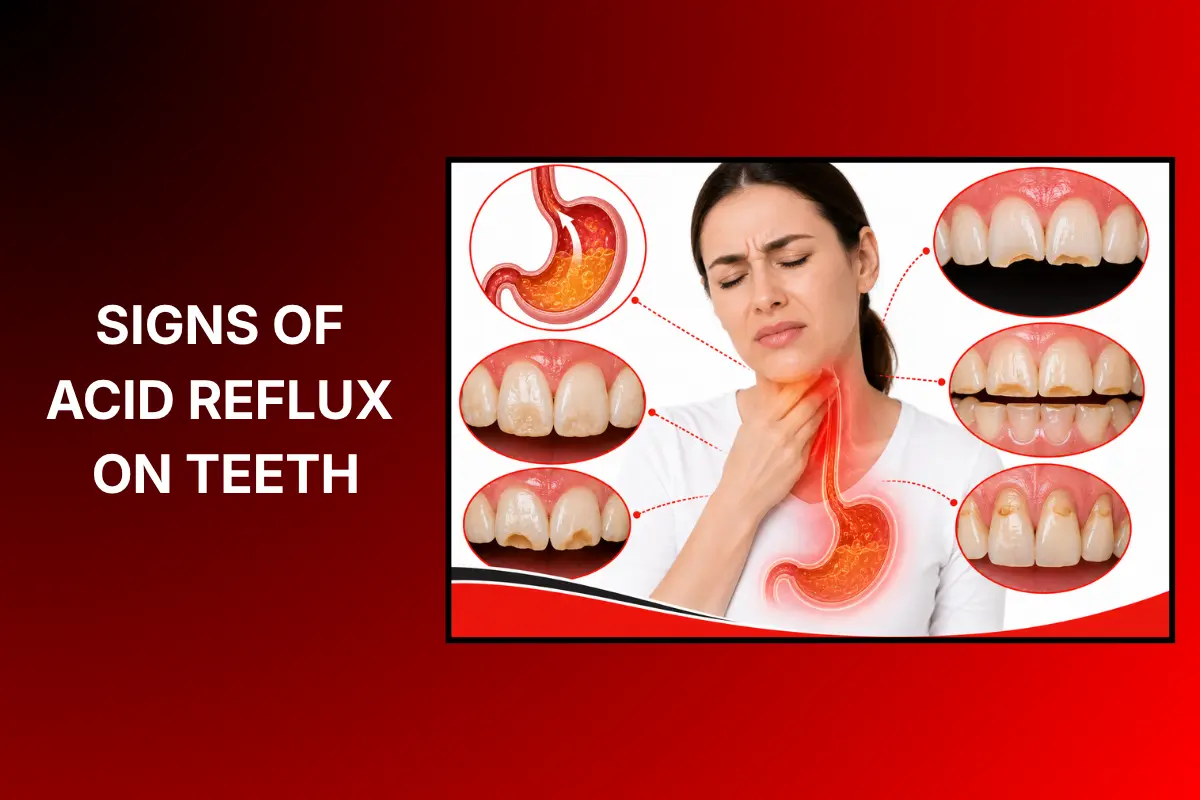
Because the structural breakdown happens gradually, early damage can easily be missed. However, as the exposure becomes chronic, several distinct signs of acid reflux on teeth begin to appear:
- Unexplained Tooth Sensitivity: As the protective enamel layer thins, the microscopic pathways leading to the central dental nerve become exposed. You will notice a sharp “zing” or lingering discomfort when consuming hot, cold, or highly sweet foods and drinks.
- A Distinct Yellow Discoloration: Enamel is naturally a translucent white tone, whereas the dense layer beneath it the dentin is distinctly yellow. As the stomach acid dissolves the outer shell, the yellow dentin begins to show through, making teeth look permanently discoloured despite intensive brushing.
- Surface Pitting and “Cupping”: Look closely at your back molars in the mirror. If you notice small, smooth, rounded craters or hollowed-out “cups” on the chewing surfaces, it is a classic indicator of chemical erosion.
- Translucent or Jagged Edges: The biting edges of your front teeth may begin to look thin, see-through, or distinctly glassy. Over time, these weakened edges easily chip, break, or develop a rough, sharp texture against your tongue.
- Amalgam Fillings “Standing Proud”: If you have older silver fillings, you might notice they suddenly look like they are rising out of the tooth. In reality, the metal fillings is unaffected by the acid, but the surrounding natural tooth structure has completely dissolved away around it.
What Happens When Stomach Acid Hits Enamel?
To understand the severity of this condition, we have to look at the chemistry of oral health. Your mouth maintains a delicate balance, typically hovering at a neutral pH level of around 7.0. The hard, protective outer shell of your teeth, the enamel begins to demineralize and soften the moment the oral environment drops to a critical threshold of pH 5.5.
While acidic everyday soft foods or soft drinks can temporarily lower your oral pH, natural stomach acid is incredibly potent, frequently registering a highly aggressive pH of 2.0 or lower. When this concentrated gastric fluid washes into the mouth, it instantly overwhelms your saliva’s natural buffering capabilities.
Rather than causing traditional bacterial decay, the stomach acid strips vital calcium and phosphate minerals straight from the enamel matrix, leaving the underlying structures soft, porous, and highly vulnerable to being physically worn away during everyday chewing.
Which Specific Teeth are Affected by Acid Reflux the Most?
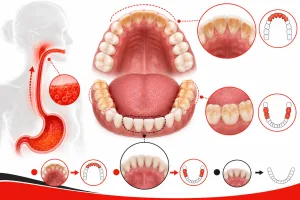
The physical distribution of dental erosion provides an accurate road map regarding where the acid enters and pools inside your mouth. Unlike dietary erosion from fruit juices or sports drinks, which typically coats the front faces of all teeth uniformly, gastric acid follows a distinct anatomical path:
- The Upper Palatal Surfaces: Because stomach acid rises from the throat, it hits the inside surfaces of the upper teeth (the side facing the roof of your mouth) first and with the highest concentration.
- The Lower Molar Chewing Planes: When you experience reflux episodes while asleep, gravity causes the acidic fluids to pool along the lower jaw line, specifically targeting the flat chewing surfaces of the bottom molars.
- The Tongue Shield Protection: Interestingly, the inside surfaces of your bottom front teeth are often completely spared from damage. This is because your tongue naturally steps in to shield them during a reflux event, redirecting the gastric contents away from that specific zone.
Why is Silent Reflux Often Misdiagnosed in Dental Health?
Many individuals dismiss the possibility of gastric damage because they do not experience classic, burning heartburn symptoms. This variation is known clinically as Laryngopharyngeal Reflux (LPR), or “Silent Reflux.”
In cases of silent reflux, the gastric juices rise seamlessly in gas or micro-aspiration forms, bypassing the main sensory nerves of the lower oesophagus and settling directly in the back of the throat and mouth. Patients with LPR are often completely unaware of the chemical destruction taking place until their dentist points out the widespread loss of enamel.
Common non-dental warning indicators of silent reflux include a persistent sour or metallic taste upon waking, chronic throat clearing, a raspy or hoarse voice, and chronic dry mouth (Xerostomia), which significantly accelerates dental damage due to a lack of protective saliva.Speak With Professional!
How Do Dentists Recognize Acid Reflux?
A common question patients ask is how a clinician can accurately determine the source of dental wear. Dentists are specially trained to differentiate between the various forms of structural tooth loss during a comprehensive oral examination:
Acid Source Differentiation Matrix
| Diagnostic Feature | Endogenous Erosion (Acid Reflux / GORD) | Exogenous Erosion (Dietary Acids) | Attrition / Abrasion (Grinding & Scrubbing) |
|---|---|---|---|
| Primary Target Areas | Palatal surfaces of upper teeth; occlusal surfaces of lower molars. | Labial (front-facing) surfaces of upper front teeth. | Biting edges of front teeth; flat, shiny wear facets across arches. |
| Surface Appearance | Smooth, silky, hollowed-out craters with rounded edges. | Widespread, flat, shallow thinning across visible smile lines. | Sharp, distinct, flat borders; matches perfectly with opposing teeth. |
| Primary Driver | Internal gastric fluids (pH 2.0). | External acidic foods, citrus, fizzy drinks (pH 3.0 – 4.0). | Mechanical friction (Bruxism) or aggressive toothbrushing. |
| Restoration Impact | Fillings appear to “float” above the surrounding dissolved enamel. | General thinning around cosmetic borders. | Direct fracture or flat wear patterns across both filling and tooth. |
What is the Best Routine to Pr0tect Enamel From Acid Reflux?
If you are living with acid reflux, your oral home care routine must change to reflect the delicate state of your enamel. Standard brushing protocols can actually accelerate damage if performed incorrectly. Use these targeted defensive steps to preserve your smile:
- Never Brush Immediately After a Reflux Episode: This is the single most critical rule. When stomach acid floods your mouth, it strips minerals and severely softens the enamel surface. If you scrub your teeth immediately with a toothbrush, you will literally brush away the softened outer layer of your tooth. Wait at least 30 to 60 minutes for your saliva to naturally remineralise the surface before brushing.
- Rinse to Neutralise Fast: Directly after an episode of reflux or morning sickness, vigorously rinse your mouth with plain water or a specialized homemade solution consisting of one teaspoon of baking soda (sodium bicarbonate) dissolved in water. This immediately neutralises the low pH and helps wash away residual gastric enzymes like pepsin.
- Upgrade Your Toothpaste Selection: Transition to a premium, low-abrasive toothpaste packed with high fluoride concentrations or specialized calcium technologies designed specifically to harden and rebuild acid-weakened enamel surfaces.
- Manage Bedtime Triggers Strategically: Reflux damage is significantly worse at night because your saliva production drops naturally while you sleep. Avoid consuming fried, fatty, or highly acidic foods for at least 3 hours before going to bed, and consider propping the head of your bed up slightly to use gravity to keep stomach acids contained.
Why Choose Night And Day Emergency Dentist To Manage Acid Damage?
Navigating dental erosion requires rapid, specialized clinical intervention to prevent tooth loss. At Night and Day Emergency Dentist, we treat acid-related enamel wear with targeted preventive care and restorative expertise:
- Immediate Sensitivity Management: If chronic erosion has left you with severe, unmanageable nerve pain or “zingers” that prevent you from eating, our 24/7 clinics can apply high-strength, professional desensitizing varnishes to seal exposed dentin channels instantly. Come Night & Day Emergency Dentist clinics to prevent dental emergencies for next time.
- Advanced Structural Restoration: Once enamel is completely gone, it cannot grow back. Our dental teams utilize state-of-the-art composite bonding techniques, custom-molded crowns, and protective overlays to shield weakened teeth, restore lost bite heights, and rebuild your visual smile beautifully.
- Comprehensive Inter-Disciplinary Reports: We don’t just treat the mouth in isolation. If we uncover significant structural signs of acid reflux on teeth, we compile detailed clinical assessments that you can present directly to your GP or gastroenterologist to help fast-track an accurate medical diagnosis.
- Round-the-Clock Peace of Mind: If an acid-weakened tooth suddenly snaps or cracks over the weekend or in the middle of the night, our emergency surgeries remain fully open around the clock to provide immediate structural repair and relief.
Frequently Asked Questions
Conclusion
The structural signs of acid reflux on teeth are an urgent call to action from your body. Because enamel does not contain living cells, it possesses no biological ability to repair or regenerate itself once it has been dissolved by stomach acid. Ignoring the early warnings of thinning edges, yellowing shades, or temperature sensitivity directly opens the door to extensive structural fractures, deep nerve infections, and eventual tooth loss. You do not have to watch your smile erode in silence. By altering your immediate post-reflux habits, stepping up your topical fluoride protection, and addressing the root digestive issues with medical experts, you can successfully halt the destructive cycle.
If you are worried about the condition of your enamel, are experiencing severe sensitivity, or require urgent repair for an acid-damaged tooth, contact the team at Night and Day Emergency Dentist immediately. We are available 24/7 to provide the professional protection, structural restorations, and expert guidance you need to keep your smile healthy and strong.